Showing posts with label Food. Show all posts

Sunday, April 18, 2010

Hokkaido's Top Rated Ramen.

I was gonna write a huge big blurb about Hokkaido's amazing food. But it's not worth it. It detracts from the point.

Hokkaido is know for a lot of stuff after all.

But the thing I like best?

Ramen.

Ramen.

Ramen.

When I say Ramen, I ain't talkin' bout those cheap noodles you buy for 10 cents a pack, the sort of thing college students live off of. Nope nope. Ramen is a soup noodle indeed, but a gourmet legacy of pure Japanese idealism; taking established ideas from other cultures and tweaking, augmenting them. The result is just unique to Japan, and completely utterly perfect in it's composition of simplicity and complexity. I mean, soup noodles, how different could they be?

Very.

There's a lot of good soup noodles around Japan. But, in my humble opinion, they just don't come close to Sapporo.

Sorry guys, I know you all thought Tokyo just ruled the Japan world in terms of everything. Wrong-o.

In fact, a fair amount of people agree. Two of the top ramen shops according to the website tabelog in the entire country are located in Sapporo. Just Sapporo.

Of them, I have been to the best one in Hokkaido, #4 in the country. And here's what I have to say about it.

Now, before I begin, yes it's true: I did a vlog a while ago about Ramen in Sapporo. But good lord, did I know so little of the possibilities that existed. The shops I had visited before pale in comparison in all ways to these legendary ramen gossip machines that top the charts.

Sumire, Junren, Ramen Yoshi, Akaboshi, just to name a few. Restaurants that are packed, talked about through the word of mouth of individuals. Yes I am name dropping here. Ugh. But what about the top rated ramen shop in Hokkaido? Number Four in the country?

The NAME, is 麺 eiji. Noodle Infant. Bahahaha.


This tinsy tiny shop is located in the "Hiragishi" district of Sapporo, which is a good 20 minute train ride from the Sapporo Station.

Indeed, there ain't much goin' on here. But it's still fairly busy

There's one thing you notice as soon as you walk in though. Not the small size (about 8 seats), or how the shop was completely full just 10 minutes into service. Nope, none of those things.


Everything is pink. Everything. The counter wood is a light shade of pink, the walls, the seats. Everything is in a shade of pink. You'll have to mind my lame iphone camera though.

Even the chopstick holders and napkin boxes.

So... pink huh? I assume this is because the word "Eiji" can mean infant, though I really have no idea. Yes I translated it that way earlier, but the word "Eiji" on the sign is written in Roman characters, so the meaning is truly unknown. But the place is pink. Well... can't let that scare me. Off we go.


Like many Ramen shops, both popular and not, you order with a vending machine style device. Insert your money, push the appropriate button for the type of ramen you want, and a ticket comes out. You hand said ticket to the cooks, they make your food, and you're good to go. Slurp your noodles, enjoy your meal, and no tip or extra cash to pay.

I had trouble deciding. The top button says "most popular", and it was a seafood pork bone broth soup. Which by all means sounds totally delicious, but I love miso ramen far more. Still, it's hard to pass up a recommendation, so I stood in front of the machine playing it out in my head. Of course, because I am foreign, they assumed that my "staring at the ticket machine not buying" status meant I was illiterate. Sigh. That's another story entirely.

So I caved and purchased the recommendation. 850 yen. This is what came.

Omggggggg

There's a lot of good to say about this bowl of noodles. It comes with raw diced onions, long onions, hand made noodles, slow roasted pork, and that dark orange jelly like stuff, collagen. The broth is rich but not overly thick. The noodles are house hand made, which like any restaurant that sells noodles, is rare, and they are perfect, slightly eggy, just cooked right. The pork is tender, but not totally fall apart mushy like some, it's maintained it's texture. The raw onions are sharp, kind of a nice bite in comparison to the smooth mellow soup. It brings thoughts of gravy to be honest.

That dark collagen, which tastes like pork essence, slowly melts into the soup, making it even richer and delivering a crazy mouth feel.

In a word, it's a very very good bowl of noodles. I can easily see why it has the #1 spot.

But do I really think it's the best bowl of ramen in Hokkaido?

I'm not sure.

I mean, it's legitimately expensive. 850 for a bowl with no egg or extra meat is expensive. And this wasn't even the most expensive one on the menu, some dishes are more than 1000 yen. At places like Akaboshi, which is also a top 10 ramen joint, 500 yen gets you ramen, and for an extra 50 yen, special sliced roasted chicken on top. Egg is included in the 500 yen price.

But I guess my biggest nag is just the flavor. The most popular flavor isn't miso? Which was invented in Sapporo? This doesn't make sense to me! Why aren't people begging for Miso? Is their miso subpar or something?

The thing is it's actually a trend in ramen shops period. Quite a few of the top ramen shops sell a variation of this pork seafood broth as their main style. 

Which I don't totally like.

Some people just won't enjoy this result. It's very... 濃い. Rich. thick. Can't translate that word well, but that's what it is I say!
But I think it's worth checking out at least once.

Sunday, April 11, 2010

New Vlog: Spicy cookies

Who in the world makes a cookie with such flavors as garlic and curry?


If embed isn't working click the link below to go directly to youtube.

http://www.youtube.com/watch?v=qfXnxm31Kjw

Ishiya Shiroi Koibito online shop (In Japanese only)
https://www.ishiya-shop.jp/

Sunday, April 4, 2010

There's CHOCOLATE in EVERYTHING!!

Yikes Mike, what are you exaggerating about now?

And ANOTHER food blog? Obsessed much?

Now that I've gotten the general criticism I'm bound to hear out of the way, let's dive right in to this morsel.

Japanese people love chocolate. I think this isn't really anything amazing as far as statements go; it seems just about everyone loves chocolate. Who could blame them? It's sweet, which is our favorite taste on the tongue*, it's rich and full of luscious fat, it smells awesome, and c'mon, chocolate TASTES good!  Do I even need to explain this? Bleh...

I like to think people in Japan tend to push the food envelope, perhaps paradoxically, in that they just make really weird ingredient combinations. Nothing seems terribly original about sticking two seemingly mismatched ideas or ingredients together, but making it WORK? Well... that's a different story.

I already covered the "chocolate covered cheeto" at this blog. That's a good example. I figured it was a fluke, because it actually kind of tasted good.

But chocolate in Japan is popular! And not just in chocolate bars y'all!

If anything some of the chocolate ideas I've seen have been frightening.

I will now provide two examples.

Introducing, chocolate instant ramen.

Mmmmmm, doubly richhhh

Basically, this is an instant ramen, miso flavored, that includes bits of chocolate, and a mini chocolate bar that you melt on top. A bit of research and you'll find that this ramen is actually based on one served a restaurant in Tokyo, who made it during the valentines season chocolate craze. The restaurant's website said it was made to appeal to women if I remember correctly.

Ah, Japanese men not being able to like chocolate, tsk tsk.

Honestly I didn't even this thing till stumbling into a convenience store, looking for a quick lazy lunch. 


Boy, did I find one!

The package says this is a combo of Ghana, a brand of chocolate bar here in Japan, and the Ramen restaurant. (Which isn't in Tokyo, so sorry, their miso just isn't up to snuff as is, but I digress). I always dig these company combos though.

Regardless... erm... how does chocolate mixed with miso ramen taste?

Erm... to be frank. Not bad. Miso in itself has a sweet component, and the richness builds on the protein salty heaviness of the broth.

It's still kind of gimmicky though.

Assuming you know Japanese, more thorough info can be found here: http://www.lotte.co.jp/news/news794.html

My second product is also fairly gimmicky.


Royce' (with the apostraphe, yes!) is a Chocolate company based here in Sapporo, they are devilishly famous for such goodies as chocolate covered potato chips and Nama Chocolate, or "Fresh Chocolate", which is so temperature sensitive and smooth you have to refrigerate it, lest it melt into chocolate goo.

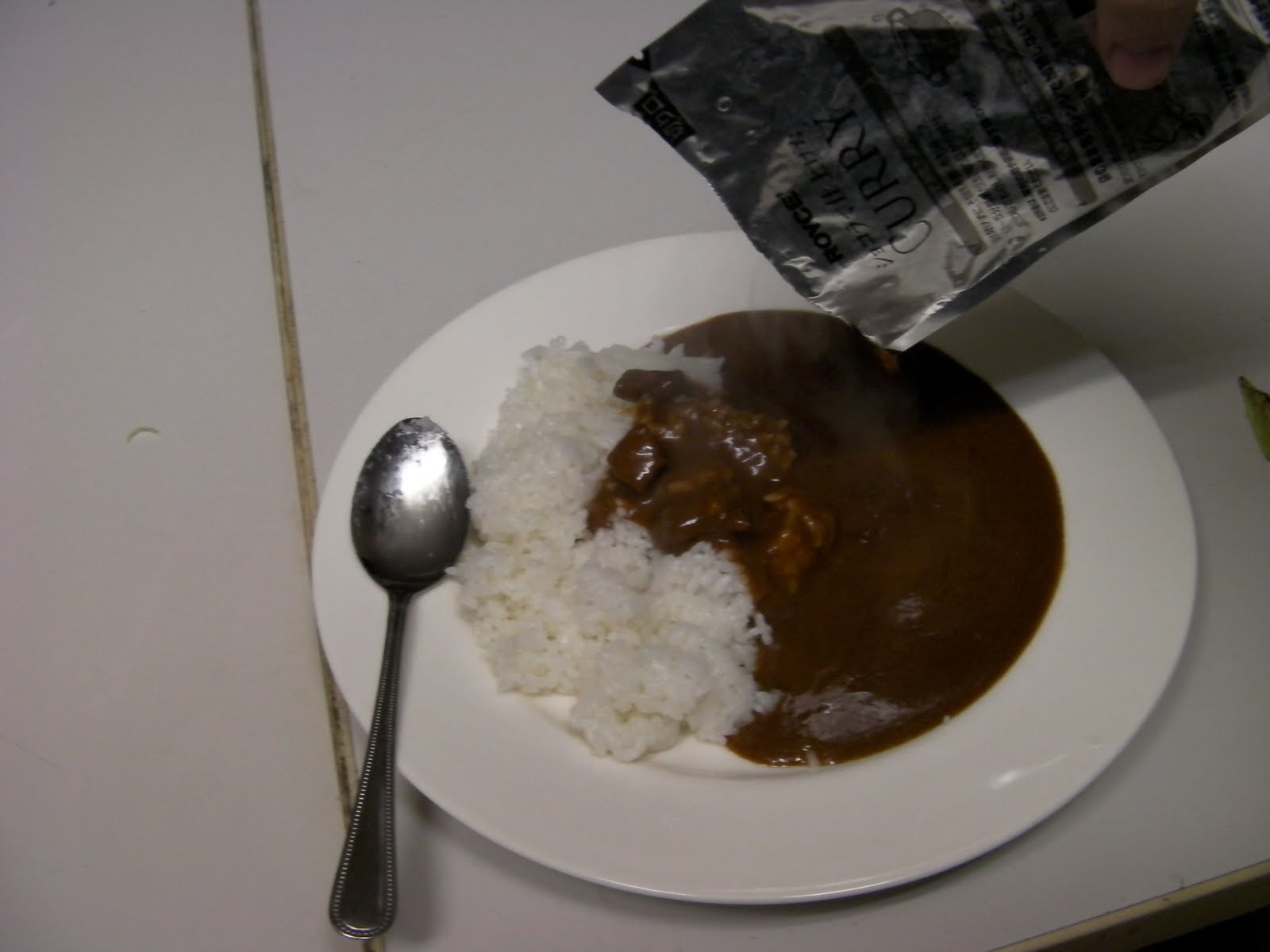
Royce also makes, as you see in the above picture, a pre-made heat 'n' eat curry. They're a chocolate company, and they sell a curry. What do you think that means?

YES, it has chocolate in it (along with other hokkaido items like milk and cream). Any making it couldn't be easier!


Step one, remove pouch from box


Step two, heat pouch in boiling water (you can also pour out the curry and just nuke it)


Step 3, serve!

出来たぞ!

Looks good!

Does it taste like chocolate? Isn't chocolate and curry weird?

Well... it doesn't really taste like chocolate at all. Very faint, a bit of a cacao bitterness. Very rich though, which was expected


Why yes, those little pools of yellow cocoa butter fat are DELIGHTFUL.

I suppose chocolate and curry isn't that odd either. You can buy chili flavored chocolates, and even some curry powder seasoned chocolate bars from places like vosages, an exotic chocolate company in Chicago.

But I think it's just a tad bit audacious to just make curry with chocolate. Ramen and curry take some balls in my opinion.

Balls of steel.

You gotta admit, the Japanese make some weird, and at times, heroic food.

I just wish I were more... blown away.

-----------------------

Lame footnote, see asterisk

*biologically, sweet taste buds sense carbs, evolutionary advantage to seek sweet as brain is primary glucose user, can't function without carbohydrate. Will break down fat and muscle tissue to make carbohydrates blahblahblah I'll stop.

Monday, March 8, 2010

When I say Kobe, you say...?

Yakuza? Possibly, I guess that's true...

Coast? Well yeah but...

Kansai region? Oh c'mon now you're just being blatant.

BEEF?

COW?!?!?!

YES! Thank you.

I'll stop being schizophrenic here.

In the three days I was in Kobe, I had Kobe beef not once, not twice, by THREE times.

Yes, every day. I am a glutton, I realize this. Thanks to the Japanese government for the scholarship! Your money is being spent well!

Before beginning my analysis as well as description, I should recommend people not do this. Please, don't eat that much Kobe beef. It's expensive. It's bad for you. And it's madly delicious.

I'm sure we all know the idea of Kobe beef: Japanese farmers managed to breed a species of cattle with high levels of intramuscular fat. Steak, normally, is rated as you all know, and part of this rating is based on this "marbling" of fat, and the highest ranking has the deepest, best little threads and veins of fat seeping through it. These fat pathways melt under high temperature, and that's what makes steak juicy and tender and rich.

Japanese farmers essentially created a new breed of cattle which is known as "wagyu" (literally Japanese Cow, or 和牛) to build on this idea of richness and fattiness in steak being delightful. This is the largest misconception about Kobe beef, as Kobe beef is a specific TYPE of Wagyu, not an actual breed of cattle itself.

In fact the name "Kobe" beef really only comes from farming techniques associated with the Wagyu cattle raised in Kobe, Japan. Most of you know the farming techniques includes daily massages with sake and feeding the cows beer to increase the appetite and relax them.

Clearly this technique has an effect on fat content, as according to some people the ratio reaches 20%meat/80%fat (to give you an example of comparison, a McDonalds hamburger is something like 70/30) Yes, four times more fat than meat in a steak. And a reverse in comparison to most beef.

This is insane nuts. This is crazy.

Does that even sound appetizing? It should!

How many of you have had foie gras? It's like that, but... steak.

Anyways.

The ability then, to produce large quantities of this steak is of course, extremely limited. Combined with large demand for delicious top quality cow, and you have prices for something like 50 dollars a 150 gram steak (that's about a 5 ouncer), or 300 dollars to the pound.

To be truthful, there is all sorts of Wagyu beef in Japan, and in many ways it seems redundant to go all the way out to Kobe to just try steak. Let alone more than once. Especially considering the whole issue with "hyper branding" in Japan. (which I covered in a previous blog here). In fact, it's very possible that Wagyu vs Kobe have almost little to no serious distinction.
But all I know is that Kobe beef is mighty delicious. And it requires proper technique to produce good results.

Let's examine the ways I enjoyed such steak. (photobomb alert)

Day one, I went to a recommended restaurant called "SteakLand Kobe"

For added effect they have TWO signs, and one is just a legit steak.

This restaurant cooks their steak teppanyaki, 鉄板焼き (quite literally iron plank grill, I love japanese!) style, meaning... er... on a big ol flattop in front of you. For 70 bucks, you get all the fixins. First they serve you filler

Seared scallops, shrimp (head and body, DELICIOUS) and a few root veggies

This also comes with salad, soup, rice, Japanese pickles (tsukemono), and smoked salmon of all things


Then the big boy. The steak.

This is not all mine, there was a guy sitting next to me

You'll notice that the steak is... really really pink. More on that later.

They had trimmed off a piece of the fat cap surrounding this steak, which they then fried up and melted down.

Mmmmm... beef fat.

This is then used to cook some beansprouts and cabbage that comes with your meal.

God... that is evil

You can see the juice just running off the beef, pooling onto the plate. All delicious cow. Also notice the glossy threads of fat through the muscle tissue. This is some rich stuff.

I kind of liked how they cut the steak for me... though honestly the pieces were still not bite sized.

You can't see it, but it was served with garlic chips and a dipping sauce.

To me, this idea of pairing up too much with the food itself, which is so rich and flavorful, is unfortunate. Simple is best when you have essentially one of the finest ingredients in the world at your disposal, let it shine.

In my opinion.

But still, you have the option to eat it as you like, and it was cooked perfectly medium rare, the fat melted and smooth. When you chew this stuff, it turns to liquid, because so little of the beef is actually protein at all. Again... very foie gras like.

SO UMMMM THAT STEAK WAS GOOD.

Came with a yuzu sorbet and coffee at the end. The acidity is a good roundout for the richness of the meat.


Overall, very satisfying.

Day two, I cannot say the same.

I hadn't originally planned on eating steak that day (or ever for that matter), but Kobe has a cute little Chinatown area that I decided to have dinner in. They have all sorts of stalls selling Gyoza, ramen, chinese dishes, etc. One of the stalls was serving kobe beef samplings for just 500 yen. I couldn't pass up the deal.

Folks, I am usually for cheap eats, but in this case, I think you frequently get what you pay for. This was not cooked well, slathered with a overbearing sauce, low end stuff. It didn't even come close to day one.

DAY THREE though, man... back on track!

After realizing I had eaten Kobe beef twice in a row, I decided to round out the trip with a 3rd attempt. Three times a charm after all. Except this time, I went to a very acclaimed restaurant named A-1 steak. Openning in Kobe quite some time ago, the restaurant is now a chain within the Kobe area serving up the goods.


This place cooks your steak, to order of course, in a different fashion, something like a combination of grilling and flambe-ing.


For 60 bucks you get soup, wine, rice, those Japanese pickles, miso soup, and STEAK.

Setting the steak aflame!


The platter he sets ablaze with brandy is really steak covered in delicious, caramelized vegetables, served on cast iron heated plates that actually continue to cook it, rendering more of that OH SO necessary fat.

Glistening, omygoodness

Also clearly lovely. Both very delicious, day one and day 3.

But one thing I MUST point out with Kobe beef.

It's not... beefy.

Like when we think of steak, we think of that deep iron tasting rich meat, high notes beefy smell, deep broody, musky flavor. Kobe beef has the richness, but the actual deep dark flavor is missing, in fact, kobe beef's over all flavor profile is extremely sublime and subtle. It's delicious, but it's hard to compare it to normal cattle.

Combining this fact with the actual color of the meat, which as I mentioned is very light pink, and originally, farmers found that people WEREN'T buying the stuff in America, because the concept of what is "beef" is so different in the states from this Wagyu profile. So Wagyu now are actually bred with Angus cattle to produce somewhat of a hybrid in America, darker flesh and more meaty flavor, but a cut from the amount of fat marbling.

Anyways, this entry is massive so...

Um....

Kobe beef is delicious. Wagyu beef is delicious. Beef is delicious. If you love food, you should try it. You can even find some places that make it amazingly, without spending hundreds of dollars a person.

Now, I have adventures to seek out.

Up up and awayyy!

Thursday, March 4, 2010

Nara In Reflection

Nara is something I think everyone needs to see when they come to Japan.

And I don't say this purely on the basis of Nara's fame: it's huge sprawling historical landmarks. Though I think anyone studying Japanese deserves to see the history of this fascinating culture, most of which seems buried beneath the modern thriving technological mass world. Tokyo towers over the feeble, old, shrines and temples of the historical world.

To be fair, Kyoto is surely visited just as much if not more than Tokyo by tourists, and it has more temples than one can count, but many of these temples are still inlaid in city, concrete piling up over them. It makes the experience impersonal, distant, and to me at least, some of the cohesiveness is greatly reduced. When you're in a beautiful temple and you see a office building pop up over the gate, it makes things odd.

No, I say people need to see Nara because the town just feels... personal.

I think with any trend of a city growing, the people become distant, seperate, individual. Tokyo is a great example of this because of so many people coming from other places to work. Groups disolve into individuals living life.

Nara is as much a place of tourism for Japanese culture as it is a real town, with real communities of individuals living life. And this sense of people actually living life is easily accessible, because the so called touristy areas are just... in housing and life. Across the street from Houryuuji temple, ie. the oldest temple in Japan, built in the 600s, are people's houses! Can you imagine living next to something that's 1300-1400 years old? And actually living there? Like... living!

I suppose my fascination with Japan lies mostly in how I am always distant from the real lives of individuals due to my foreigner status. But when I take a walk down the streets of Nara, I feel that sense of realism, like I have fallen into a very real world filled with interacting groups of people. It's not just a city with people coming in to work, and then leaving. It's not just a place were people go to see stuff. These roles exist too, yes, but in truth Nara is a town where people just do what we're supposed to, they live.

This combination of living among something extremely important is fascinating to me, and personal, and moving.

And even a point of tourism, this place has really cool stuff! Nara is legitimately beautiful. Parks, trees, nature is everywhere, the temples are magnificent, and the architecture of even peoples houses is reminiscent of something old and sacred.

I can't help but be amazing by the intense beauty of this town.

And the food! The food was amazing! Little mom and pop shops that have been open for 40 years. The town just feels PERSONAL.

Two examples of amazing food come to mind. All in one day mind you.

Roost Cafe, about 20 minutes from Houryuuji.
Roost is an amazing cafe that takes old world Japanese cuisine and applies new world twists to it. The interior is ironically decorated with African items (I still don't get this part), but the food is very Japanese. For 10 dollars you get this:


Beautiful
Extremely well presented, 6 little tiny dishes of Okazu (お菜), or side dishes on the left, tofu, potatoes, wakame, stewed onions, among others, and to the right, a salad of tomatoes, garlic, and lettuce, with lightly breaded and fried salmon, with roasted tomato mayonnaise. And rice. And miso soup. And amazing coffee.

For 10 dollars. Just... insane.

Along with that.


THE BEST produce I HAVE EVER TASTED IN MY LIFE. I had the pleasure of walking by a local farm and purchased some strawberries. They were all about the size of your thumb, and they MELT in your mouth, fragrant and ungodly sweet, hints of rose and mint behind the EXPLOSION of strawberry. Just insane! INSANE! And across the street, a temple from the 700s. Like... wtf?

Tokyo, Sapporo, Osaka, how come Nara just owned you on the trip in terms of food?

It's just an incredible place.

I'm sure I am not fully getting my emotions across through this blog, so I'll just say this. Nara was amazing. It has been hands down one of the most memorable experiences of my life.

Thursday, February 25, 2010

Tuesday, January 12, 2010

Vlog: Jacksonville Burger

I am a fool who does "Coming of Age Day" in the most American tradition I know: eating burgers.

Check the vid!

For some reason the video doesn't fit into the screen... hmmmm.

Click the link for a direct youtube vid:

http://www.youtube.com/watch?v=T5sOrV1Wy-k


Sunday, January 10, 2010

Japanese Cheetos

Who doesn't know what Cheetos are?

The puffed crispy strips of delightful nuclear orange cheesy powdery goodness, every kid in America has had a cheeto before. And everyone knows exactly how they taste. Salty crunchy, and artificially cheesy.

But alas, perhaps in an attempt to market to different tastes, cheetos, do exist here, but they taste different.

That's right, they taste different.

And no, I don't mean they sell "roasted corn" flavor here and Cheese flavor there (which they do). I mean that A cheese flavored cheeto from Japan tastes COMPLETELY different from a Cheeto from America.


I mean dang they aren't even the same color!

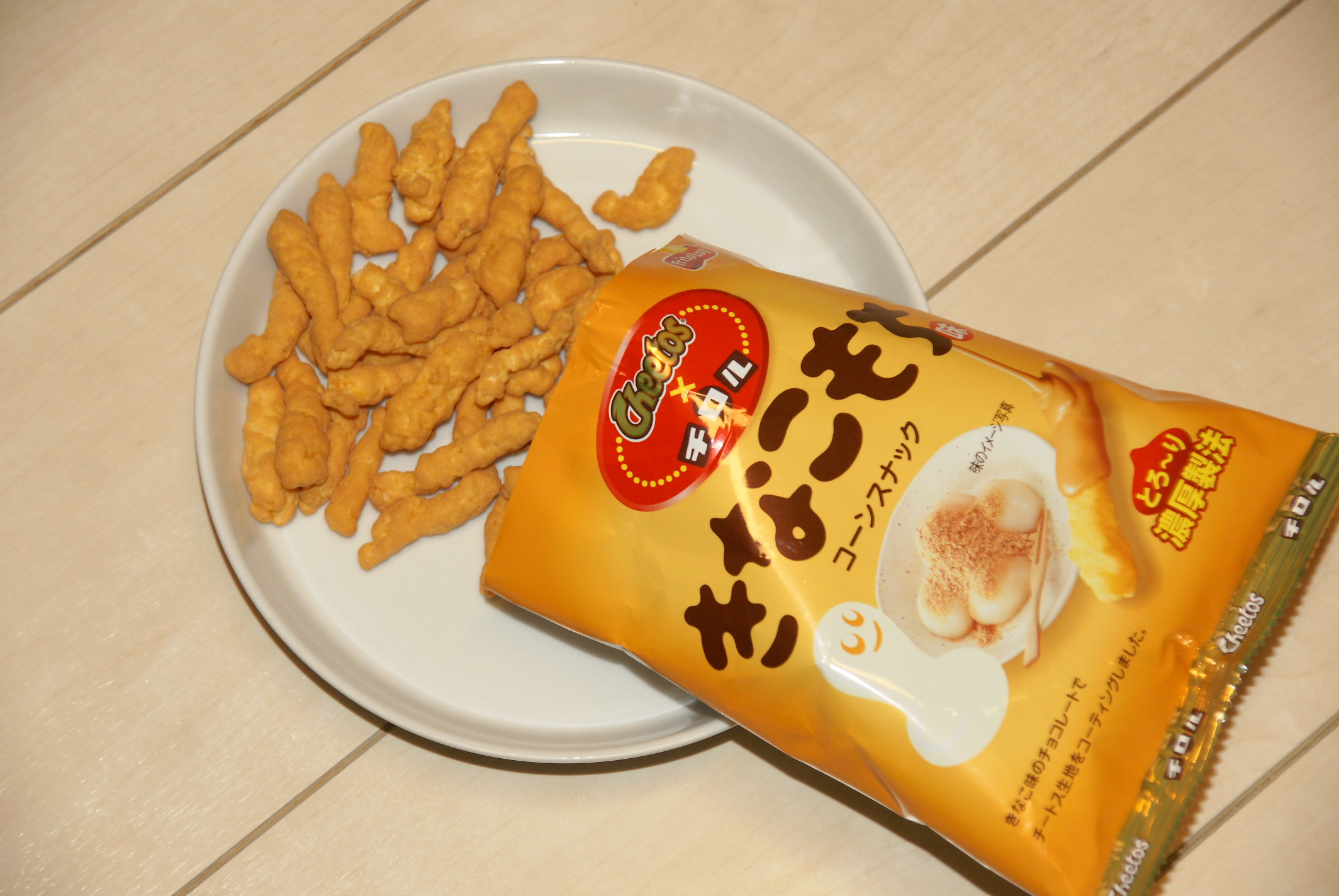
But Alas, as I mentioned before, they have other flavors besides cheese. Perhaps one of the most shocking is "Coffee Nougat flavor". Tirol, a chocolate company, teamed up with Cheetos to make this "collaborative effort"

Aka, a chocolate covered cheeto.

I am an adventurer, and so when I noticed the package labeled "Tirol x Cheetos", I simply HAD to purchase it.

Ohhhhh delightful.

Upon opening the package I was surprised to find that the cheeto itself was rather... boring looking. It almost looked like it just had Dusty Chocolate powder on it.

I mean really Fritos, what a lame looking snack!

But how'd it turn out?? That's the important question!


Kinda tasty actually. Think chocolate pretzel, but more crunchy, less salty, and a bit of coffee on the coating. Also Chocolate. And a cheeto. Wow.

Super surreal though. What a ridiculous snack.


...


What the... soy flour mochi flavored chocolate covered?? TIROL YOU MONSTERS!!!

(I wish there was a better translation for that...)

Saturday, December 12, 2009

Okinawan Food

Okay look look look, yes. I know.

I know.

I knowwwwwww.

Too much food stuff right?

Pardon me while I break down the necessary link between food and culture.

Argument goes as follows (thanks Mr Basl for this argument flow chart format!)

1. People cook based on their tastes, their likes and dislikes.
2. People can be classified into cultures.
3. Cultures determine the way people behave.
THEREFORE
4. Culture can determine a given diet.

Duh kids. Duh.

SO

In a culture related way, I'd like to talk about my Friday.

I am blessed enough to be taking a class from a VERY cool medicine teacher (don't ask how this situation came to be, what a story that is!). He's so cool that last week he decided to cancel class and INSTEAD, take the students to an Okinawan restaurant. In Hokkaido.

For those who don't know, Okinawa is one of the prefectures of Japan, consisting of hundreds if not thousands of tiny islands south of the main four. I'm not here to give a history lesson, but basically, this cluster of islands is fairly detached from the centralized country that focuses on Tokyo/Osaka culture. 標準語, or standard Japanese, is really just Toyko Japanese, which due to centralization within the culture, gradually became "normal'.

But to avoid a tangent here, because this area is somewhat detached from the "center", the culture, and in turn the food, can be quite distinct.

Yes, they do have their own dialect. I won't go into that either.

This is a point that needs to be addressed; Japan is not just a single likeminded country. People act, speak, look, and think VERY differently from place to place. If you took an Okinawan and an Osakan and made them speak in their respective dialects, the two wouldn't understand each other. It'd be like Spanish and Italian.

The problem is that we, as people on the outside, just SEE the culture as being Tokyo-ian or Osakan, because of this center ideology within the country. This is "Japanese", Tokyo is the hub, everything shoots out from there. But if you are to understand a country's culture, focusing on a city will give you a very narrow outlook on it.

I mean c'mon, do people from New Orleans act like people from New York? I'm not saying anything new here!

So with that in mind, let's focus on Okinawa, a prefecture SO far from the rest of the country, in many ways it's like it's own country. But it's Japan! It's JAPAN!

For 2500 yen, you get a multiple course meal and all you can drink. I dig it. Thanks teach for the hook up!

And the food is CRAZY different. Maybe this is partially the genius of the owner/chef, or maybe it's just the way Okinawans do cuisine, but let's see. Here's some of the highlights:


Squid Ink Yakisoba, with special Okinawa style soba.

Squid ink, for my Japanese word nerds, is quite literally in Japanese ALSO "Squid Ink" or イカ墨.

Anyways.

Then they brought out a special Okiawan style Shochu, which is a clear distilled alcoholic drink similar, but much stronger than, Sake, usually served over ice. It has a similar smell to some whiskey, but contains far less alcohol. Here's what they served it as:


This one was especially smooth. But the nose was a little off putting... kind of musky. Still fairly enjoyable. It paired extremely well with one dish in particular, which was a small block of Tofu covered in a red miso sauce.


Perhaps the reason this tofu worked so well with the sake was because it had been soaked in the alcohol itself. But the texture of it was really marvelous, It has this kind of butter, smooth, rich mouth-feel, the kind you associate with foie gras or something. Explains why it came in at less than 1 cubic inch to be shared by 3 people. Riiiiich. And pretty dang impressive. I've obviously never had tofu like that.

But surely, to everyone, the highlight of the night was the following dish, which actually came pretty early:


The title of this dish in romaji is "Gooya Champloo". Nerds recognize the name Champloo imediately from the popular anime Samurai Champloo. Champloo in Japanese is ACTUALLY チャンプルー, pronounced "Chanpuruu", and it refers to a stir fry dish, a "mash up" of sorts. The name of the anime actually is derived from this "stir fry/mashup" idea, as the story combines multiple genres and ideas, even stories themselves.

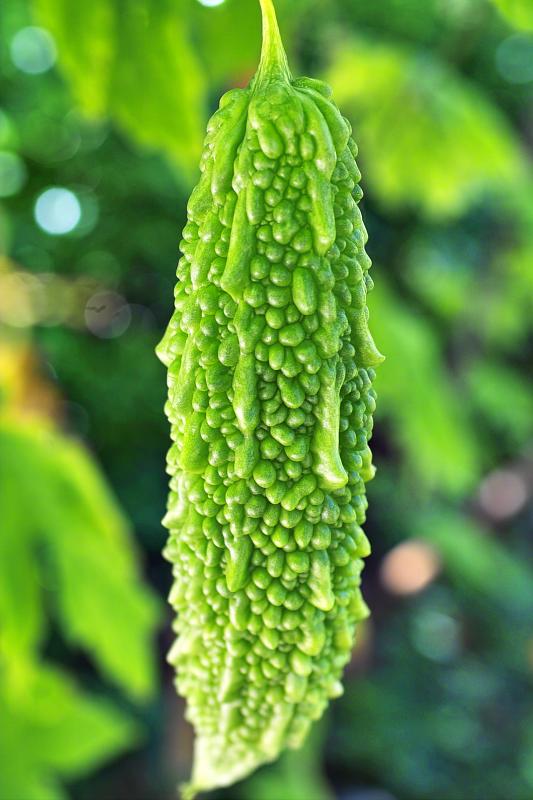
AND, Gooya, oh gooya, means "Bitter melon". Those green things you see? Bitter melon.

I googled bitter melon to show yall, they look like this:

Mmmmm, bitterrrrr

VERY different taste on this one folks. It's hard to describe bitter melon, something like a root vegetable but with less aroma, a slight bitter kick, better texture. But it's as Okinawan as it gets. Stir fried with some tofu and a little ham (which was shocking for sure, you don't see ham much in Japan), And it was TASTYYYYY.

And that's Okinawan food.

So what have we learned here?

Well what HAVEN'T we learned here? Food is indeed a mirror to a culture, and despite the idea that a country can have it's own style, regions make variations on the diet extremely distinct.

I mean, what IS Japanese food?

Friday, November 27, 2009

Big Chance Card!

Alright, I love free stuff, it's quite true.

At the beginning of November, the local Co-op, or the cooperative store, OR private business on campus that cooperates with the school to sell general food and household products (whew that's long), began a "value campaign" in which, during a rather nifty price cutting session, people could possibly win prizes while doing their shopping at co-op, by entering into a raffle.

The system for getting tickets to enter said raffle is fairly
interesting.

Each time an individual spends 400 yen, or about 4 dollars, they receive a "抽選補助巻" {Chuusenhojomaki), or a "raffle assistant ticket" which looks like this:

Don't ask why I'm so vain. XD

Notice that these are translated as "assistant" tickets. This suggests that simply getting one of these bad boys is not enough. In fact, to even enter the raffle, you must collect ten of these "assistant" tickets, and then trade them in for one legitimate ticket. The REAL ticket is much like you'd expect; it has a ticket number that you input into a form online to enter for a chance to win prizes.

What kind of prizes?

Well look at this link here!

http://www.hokkaido.seikyou.ne.jp/value/

Or this screen cap I took, if you're lazy. Though you still might want to click it.

Crazy Japanese advertising...

One person can win a PS3, one person a Wii, two people walk away with brand new computers, 15 people get ipod nanos, and so on.

Naturally, I figured hey, I buy lunch often enough from the university... why not go for it?

Because 10 tickets is a deceivingly large amount of money. It's 4000 yen, or around 40 usd. And this assumes you spend 400 yen perfectly each time. Obviously you'd always spend more, so who knows how much money you'd spend to get 10 of those! Could be even 7000 yen!

For one chance at those prizes.

So really... you should just save your money and buy a nano yourself. It'd be far cheaper.

Unless you're smart like me, and you continue buying lunch as normal and mooch all your friends for the tickets they don't want to use.

That's some ego boosting right there. But essentially all my friends gave me the tickets they also got, since we all usually buy stuff from co-op at SOME point.

Well... Mike... that's cool and all. But did your plan work? How many did you get?


Six. I got six. Quick math makes that about 2.4 man, or 240 dollars of tickets. More like 300.

I am evil.

Now I sure hope this gives me any chance at all; closer inspection of the contest reveals that it's not just for the Sapporo campus but for ALL campuses of Hokkaido University.

Crapz.

But maybe other people won't spend as much money as I (through cooperation) amassed, right? Right?

Urg...

With me luck? I'd love a new free something! We'll find out December 9th!

- Mike

Tuesday, November 24, 2009

New Vlog: Apples

I eat too much, I know.

But check out the video below!


If the embed doesn't work, click the link below!

http://www.youtube.com/watch?v=HeYhdR6ES8o

Link about Aomori's legendary "Ki ni Naru Ringo" (気になるリンゴ)(in japanese unfortunately, but really sweet photos) :
http://www.rakuten.co.jp/ringoen/557880/557929/

Tuesday, November 10, 2009

Sapporo Ramen Alley, 札幌ラーメン横丁

I went to a touristy tourist trap with my friend Tre. As he called it, we're "long term tourists," so it seemed fitting. Enjoy the video below!


If the embed isn't working, click the url below!

http://www.youtube.com/watch?v=jY5vvZAN7oI

Tuesday, November 3, 2009

Hyper Branding

Most of you read my previous blog about food. Specifically the one with insanely priced melon.

And I'd assume, based on the messages and comments that I've gotten from my American friends, that a lot of people have become fairly defensive over the subject. How am I so audacious as to criticize American food but not Japanese food?

In fact this is a legitimate point. No culture is perfect, no food without criticism and no form of pleasure absolute. Perhaps it is philosophical of me, but the inherent quality of pleasure is that it ends, which just by hedonistic definition is bad. We all die, after all.

Therefore, it only seems fair to maybe take a stab at Japanese food. We've already discussed American food and it's seemingly less than desirable respect for the ingredients in which food is made.

But let's consider the opposite. What if you respect food TOO much?

It leads to something I'll call "hyper brand naming," and this is a phenomena all too common in Japan.

Perhaps we are all familiar with the idea of branding as a marketing tool. Fashion requires brands to make sales, fast food chains require a brand name to establish a sense of similarity among different shops as a pull strategy. Chipotle is owned by McDonalds? You'd never know, the brand name is what you assign the product to, not the stockholders equity.

Okay, fine fine, that's pretty standard. We need names to help us generalize by quality. It helps us make decisions.

Alas, in Japan, this trend is, well... obscene. Appalling. Hilarious.

To my previous readers, maybe you remember the melons I took a picture of? They are actually a brand of melon called "Yubari Melon", which is a melon farm located in the town Yubari, Hokkaido. The strange thing is that, as my friend Teppei told me recently, those melons are CHEAP compared to normal Yubari Melon.

Normal Yubari Melon, as Wikipedia also agreed with, costs 60-150 USD.

I mean to be fair it's quite pretty, ahahaha. Priced at around 70 USD.

Ho
Ly
Crap.

And thus we have the problem with hyper branding. No one in their right mind would spend 60 dollars on ONE fruit in the states. It's a melon, you have to draw a line somewhere. But precisely because it's made by Yubari, there is a niche market for it. This company survives in this cultural climate.

This idea of branding however, is frequently put towards food as a location, rather than a company, though there are some exceptions. As an example, other companies make Nama Caramel for far less, but the Hanabatake farm (the one I purchased) is the original, and thus the most liked. They have established branding.

We have it in America too, (Wisconsin cheese?), but this is taken to a hyper extreme. Japan loves branding. They love the idea that a product came from somewhere special. Kobe beef, Hokkaido milk, Kyoto green tea, I mean the list is endless.

Perhaps more appalling is that this is actually taken one step further. Products, to further make sales, stick on key brand words to their products. Yubari melon flavored white chocolate, or Hokkaido milk flavored cookies, as examples. Not melon, but "Yubari", so it must be better somehow, despite it not being an actual melon at all.

Does the quality always correlate with the brand? I'd be willing to bet no.

It's merely a completely outlandish extension of the idea of "local food." Everything has a location and thus a price and a suggested quality. But for many times it's just a marketing strategy, it has nothing to do with how good the dang thing tastes.

This correlates well with the idea of "omiyage" or souvenir gift giving, which comprises mostly of expensive, BRANDED foods that are limited. A perfect example is Shiroi Koibito cookies (White Lover in english, lolz). Despite being factory made, and easily shipped nation wide, Shiroi Koibito is only purchasable in Hokkaido, and only really consumed for gift giving.

Well what if I just wanna eat some Shiroi Koibito? Those things are tasty! Why isn't this product expanding? Why do I need to be in Hokkaido to buy cookies for 20 dollars? That's nuts!

Ooooh, brand appealllll.

Because the brand, the idea that it is limited, is appealing. Too appealing. Everything is branded, and too much stuff is "limited time only". And most of it is nonsense.

It's like fashion of food.

To be fair... it usually tastes pretty darn good. But not for all the extra effort and branding.

Sunday, October 25, 2009

Oh MAN is that expensive!

Okay... I know people are sick of my food talk. I can't help it, honestly!

Food is so important in all cultures, and if anyone knows my background at all, I have a pretty long relationship with food and cooking. So it only makes sense that my observations in cultural differences and adventures would largely incorporate food.

It's only fair to mention that Hokkaido is renown in japan for it's high quality produce, fish, and general food stuffs.

Observe the following image below.


Why yes, those melons are being sold at 1100 to 1800 yen a PIECE. All different types of melon, each categorized by sweetness, size, flesh color, and priced accordingly.

It's gradually come to my attention that food in Japan has a dominant focus on local production and high quality. These melons are expensive because they're grown nearby, without high infrastructure shipping methods or big corporation cost reduction strategies.

In other words, they're local, and I'd bet my foot and arm some of the best melon you will ever taste.

Similarly, I present "Nama Caramel", or quite literally, "Raw Caramel"


Why yes this is amazing stuff

A Hokkaido specialty, nama caramel is a caramel candy which is slowly cooked at low heat at hours at a time.

The result is a candy which must be kept in the refrigerator, or else, quilt literally, the candy will melt. It is a caramel with the texture and mouth feel of butter, smoothly coating the palate as is gently warms and melts over the tongue. Simple and yet extremely deep flavor, rich, completely and utterly delicious. It honestly made me speechless.

And it costs 850 yen for that tiny container of 12.

Which might seem outlandish. Who would spend $8.50 on caramel?

But that store is packed, every day throngs of customers gaze at the treats. Why?

Because here in Japan, quality, the assurance of something special, be it a simple melon that was grown with detail to perfect flavor and appeal, or instead a perfectly smooth luscious slice of tuna, or a simple candy that is created so flawlessly and deliciously, has become a very modern trend. The foodies here are satisfied by the simple, yet perfect.

By comparison, American cookery, with it's overly detailed 30 ingredient dishes, absurd "molecular gastronomy" techniques, and redundant recipes, is a joke.

A caramel, a melon, a slice of fish. Respect for the ingredients themselves. This is missing from the American food world.

But it exists here, and it is delicious.

Friday, October 16, 2009

Kit Kats (キットカット)

I think pretty much everyone on the planet loves Kit Kats. They're crispy, chocolatey, small, delicious, easy to find and carry, and sharable. If you don't like Kit Kats, well... I'm sorry. Something is wrong with you. I'm not biased, I just think most people agree with me on this one.

So, imagine, if you will, one of the quintessential candies on this earth.

Part two to this wonderful equation is Japan: which is a land of extremes of course. All the proof you need is Ganguro girls:


GOODNESS that is a lot of makeup! If you took a photo of a geisha in negative is what I'm saying.

Thus, in the land of Japan, why would anyone ever stop at just one good thing? Why not make it EXTREME??

I imagine the conversation went like:
"Psh, Kit Kats are so BORING, why don't we try to hype up the flavor more?"

Modern Japanese candy production, then, has come to a point where, for any flavor of anything you can dream of, there exists a Kit Kat flavored like it.

When I say "any" ladies and gentlemen, I don't merely mean fruits and sweets. I mean even things that, to the unassuming observer, are grotesque and odd, and off-putting.

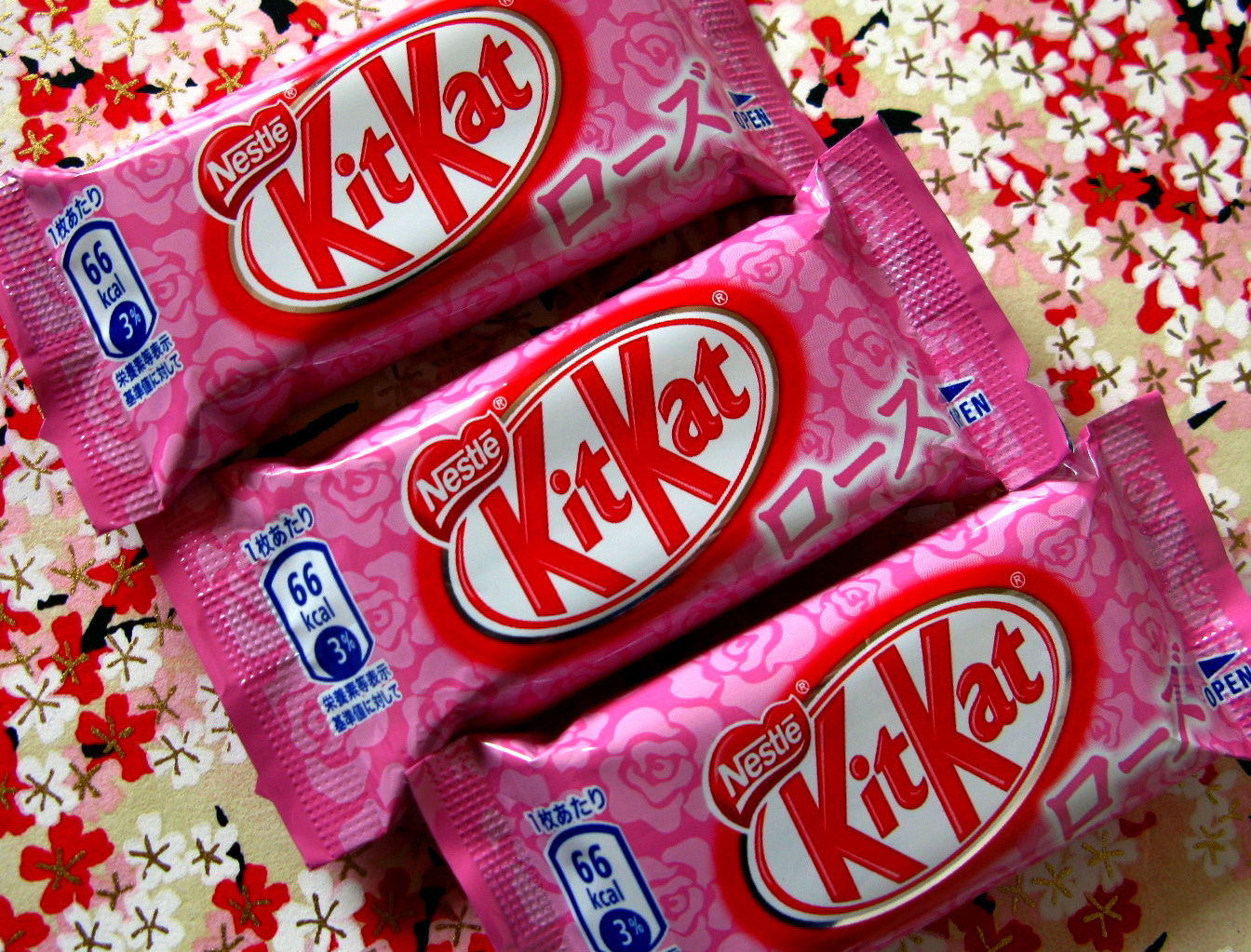
Seriously.... come now. A few flavors I've seen:

Rose

Lemon Vinegar

Soy Sauce

Why yes, this is very real. And very wild, even by most Japanese people's standards. But obviously someone is consuming them. Including myself. Wowwie.

Actually, for my own curiosity, a week into staying here I bought "Hokkaido Roasted Corn" flavored Kit Kats:

Despite what you may think... quite tasty.

So what have we learned today?

Er... not much. Japanese Kit Kats are crazy. But with an open mind, a lot of them end up being pretty delightful.