Showing posts with label Japan. Show all posts

Sunday, April 18, 2010

Hokkaido's Top Rated Ramen.

I was gonna write a huge big blurb about Hokkaido's amazing food. But it's not worth it. It detracts from the point.

Hokkaido is know for a lot of stuff after all.

But the thing I like best?

Ramen.

Ramen.

Ramen.

When I say Ramen, I ain't talkin' bout those cheap noodles you buy for 10 cents a pack, the sort of thing college students live off of. Nope nope. Ramen is a soup noodle indeed, but a gourmet legacy of pure Japanese idealism; taking established ideas from other cultures and tweaking, augmenting them. The result is just unique to Japan, and completely utterly perfect in it's composition of simplicity and complexity. I mean, soup noodles, how different could they be?

Very.

There's a lot of good soup noodles around Japan. But, in my humble opinion, they just don't come close to Sapporo.

Sorry guys, I know you all thought Tokyo just ruled the Japan world in terms of everything. Wrong-o.

In fact, a fair amount of people agree. Two of the top ramen shops according to the website tabelog in the entire country are located in Sapporo. Just Sapporo.

Of them, I have been to the best one in Hokkaido, #4 in the country. And here's what I have to say about it.

Now, before I begin, yes it's true: I did a vlog a while ago about Ramen in Sapporo. But good lord, did I know so little of the possibilities that existed. The shops I had visited before pale in comparison in all ways to these legendary ramen gossip machines that top the charts.

Sumire, Junren, Ramen Yoshi, Akaboshi, just to name a few. Restaurants that are packed, talked about through the word of mouth of individuals. Yes I am name dropping here. Ugh. But what about the top rated ramen shop in Hokkaido? Number Four in the country?

The NAME, is 麺 eiji. Noodle Infant. Bahahaha.


This tinsy tiny shop is located in the "Hiragishi" district of Sapporo, which is a good 20 minute train ride from the Sapporo Station.

Indeed, there ain't much goin' on here. But it's still fairly busy

There's one thing you notice as soon as you walk in though. Not the small size (about 8 seats), or how the shop was completely full just 10 minutes into service. Nope, none of those things.


Everything is pink. Everything. The counter wood is a light shade of pink, the walls, the seats. Everything is in a shade of pink. You'll have to mind my lame iphone camera though.

Even the chopstick holders and napkin boxes.

So... pink huh? I assume this is because the word "Eiji" can mean infant, though I really have no idea. Yes I translated it that way earlier, but the word "Eiji" on the sign is written in Roman characters, so the meaning is truly unknown. But the place is pink. Well... can't let that scare me. Off we go.


Like many Ramen shops, both popular and not, you order with a vending machine style device. Insert your money, push the appropriate button for the type of ramen you want, and a ticket comes out. You hand said ticket to the cooks, they make your food, and you're good to go. Slurp your noodles, enjoy your meal, and no tip or extra cash to pay.

I had trouble deciding. The top button says "most popular", and it was a seafood pork bone broth soup. Which by all means sounds totally delicious, but I love miso ramen far more. Still, it's hard to pass up a recommendation, so I stood in front of the machine playing it out in my head. Of course, because I am foreign, they assumed that my "staring at the ticket machine not buying" status meant I was illiterate. Sigh. That's another story entirely.

So I caved and purchased the recommendation. 850 yen. This is what came.

Omggggggg

There's a lot of good to say about this bowl of noodles. It comes with raw diced onions, long onions, hand made noodles, slow roasted pork, and that dark orange jelly like stuff, collagen. The broth is rich but not overly thick. The noodles are house hand made, which like any restaurant that sells noodles, is rare, and they are perfect, slightly eggy, just cooked right. The pork is tender, but not totally fall apart mushy like some, it's maintained it's texture. The raw onions are sharp, kind of a nice bite in comparison to the smooth mellow soup. It brings thoughts of gravy to be honest.

That dark collagen, which tastes like pork essence, slowly melts into the soup, making it even richer and delivering a crazy mouth feel.

In a word, it's a very very good bowl of noodles. I can easily see why it has the #1 spot.

But do I really think it's the best bowl of ramen in Hokkaido?

I'm not sure.

I mean, it's legitimately expensive. 850 for a bowl with no egg or extra meat is expensive. And this wasn't even the most expensive one on the menu, some dishes are more than 1000 yen. At places like Akaboshi, which is also a top 10 ramen joint, 500 yen gets you ramen, and for an extra 50 yen, special sliced roasted chicken on top. Egg is included in the 500 yen price.

But I guess my biggest nag is just the flavor. The most popular flavor isn't miso? Which was invented in Sapporo? This doesn't make sense to me! Why aren't people begging for Miso? Is their miso subpar or something?

The thing is it's actually a trend in ramen shops period. Quite a few of the top ramen shops sell a variation of this pork seafood broth as their main style. 

Which I don't totally like.

Some people just won't enjoy this result. It's very... 濃い. Rich. thick. Can't translate that word well, but that's what it is I say!
But I think it's worth checking out at least once.

Sunday, April 11, 2010

New Vlog: Spicy cookies

Who in the world makes a cookie with such flavors as garlic and curry?


If embed isn't working click the link below to go directly to youtube.

http://www.youtube.com/watch?v=qfXnxm31Kjw

Ishiya Shiroi Koibito online shop (In Japanese only)
https://www.ishiya-shop.jp/

Sunday, April 4, 2010

There's CHOCOLATE in EVERYTHING!!

Yikes Mike, what are you exaggerating about now?

And ANOTHER food blog? Obsessed much?

Now that I've gotten the general criticism I'm bound to hear out of the way, let's dive right in to this morsel.

Japanese people love chocolate. I think this isn't really anything amazing as far as statements go; it seems just about everyone loves chocolate. Who could blame them? It's sweet, which is our favorite taste on the tongue*, it's rich and full of luscious fat, it smells awesome, and c'mon, chocolate TASTES good!  Do I even need to explain this? Bleh...

I like to think people in Japan tend to push the food envelope, perhaps paradoxically, in that they just make really weird ingredient combinations. Nothing seems terribly original about sticking two seemingly mismatched ideas or ingredients together, but making it WORK? Well... that's a different story.

I already covered the "chocolate covered cheeto" at this blog. That's a good example. I figured it was a fluke, because it actually kind of tasted good.

But chocolate in Japan is popular! And not just in chocolate bars y'all!

If anything some of the chocolate ideas I've seen have been frightening.

I will now provide two examples.

Introducing, chocolate instant ramen.

Mmmmmm, doubly richhhh

Basically, this is an instant ramen, miso flavored, that includes bits of chocolate, and a mini chocolate bar that you melt on top. A bit of research and you'll find that this ramen is actually based on one served a restaurant in Tokyo, who made it during the valentines season chocolate craze. The restaurant's website said it was made to appeal to women if I remember correctly.

Ah, Japanese men not being able to like chocolate, tsk tsk.

Honestly I didn't even this thing till stumbling into a convenience store, looking for a quick lazy lunch. 


Boy, did I find one!

The package says this is a combo of Ghana, a brand of chocolate bar here in Japan, and the Ramen restaurant. (Which isn't in Tokyo, so sorry, their miso just isn't up to snuff as is, but I digress). I always dig these company combos though.

Regardless... erm... how does chocolate mixed with miso ramen taste?

Erm... to be frank. Not bad. Miso in itself has a sweet component, and the richness builds on the protein salty heaviness of the broth.

It's still kind of gimmicky though.

Assuming you know Japanese, more thorough info can be found here: http://www.lotte.co.jp/news/news794.html

My second product is also fairly gimmicky.


Royce' (with the apostraphe, yes!) is a Chocolate company based here in Sapporo, they are devilishly famous for such goodies as chocolate covered potato chips and Nama Chocolate, or "Fresh Chocolate", which is so temperature sensitive and smooth you have to refrigerate it, lest it melt into chocolate goo.

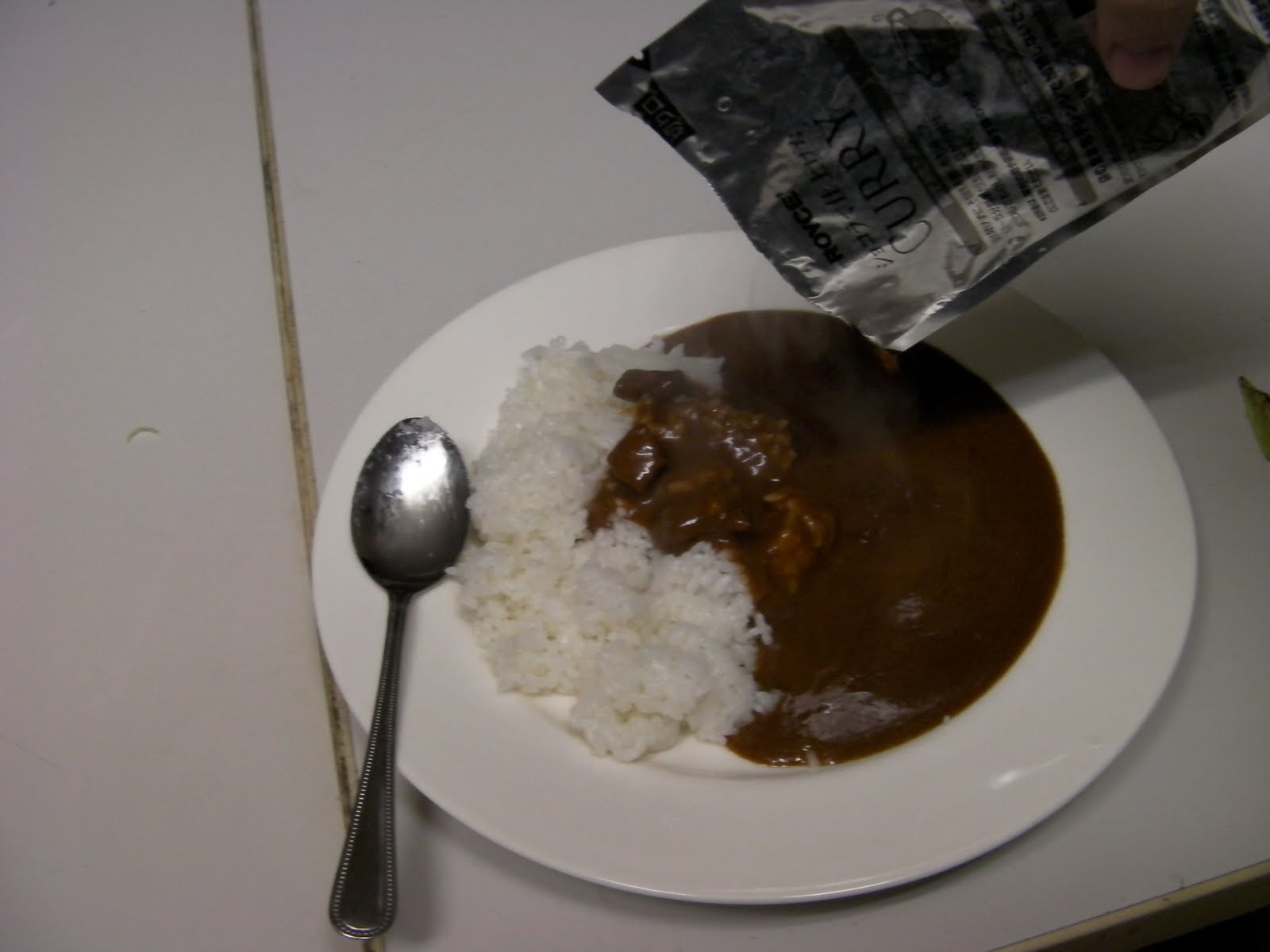
Royce also makes, as you see in the above picture, a pre-made heat 'n' eat curry. They're a chocolate company, and they sell a curry. What do you think that means?

YES, it has chocolate in it (along with other hokkaido items like milk and cream). Any making it couldn't be easier!


Step one, remove pouch from box


Step two, heat pouch in boiling water (you can also pour out the curry and just nuke it)


Step 3, serve!

出来たぞ!

Looks good!

Does it taste like chocolate? Isn't chocolate and curry weird?

Well... it doesn't really taste like chocolate at all. Very faint, a bit of a cacao bitterness. Very rich though, which was expected


Why yes, those little pools of yellow cocoa butter fat are DELIGHTFUL.

I suppose chocolate and curry isn't that odd either. You can buy chili flavored chocolates, and even some curry powder seasoned chocolate bars from places like vosages, an exotic chocolate company in Chicago.

But I think it's just a tad bit audacious to just make curry with chocolate. Ramen and curry take some balls in my opinion.

Balls of steel.

You gotta admit, the Japanese make some weird, and at times, heroic food.

I just wish I were more... blown away.

-----------------------

Lame footnote, see asterisk

*biologically, sweet taste buds sense carbs, evolutionary advantage to seek sweet as brain is primary glucose user, can't function without carbohydrate. Will break down fat and muscle tissue to make carbohydrates blahblahblah I'll stop.

Thursday, April 1, 2010

Okinawa in Reflection (Yes this post is also too long)

Why yes, I do realize that this is 2 weeks late.

Yes, I did get back home on the 19th, so I HAVE been putting it off.

Why though? Because I'm lazy? Well naturally yes, but perhaps more importantly, Okinawa is hard to define and blog about.

To write an entry about this place wouldn't do it justice. And I don't say that because Okinawa is some amazing magical Japanese wonderland where Unicorns poop rainbows, but more because the place is... different.

On mass scale.

For one. Okinawa is a VARIETY of islands. To say I've gone "there" is in itself fairly audacious, because the sheer number of islands are all different. You have islands like "Okinawa Island", which includes Naha, the capital of the prefecture, as well as a fairly large city of around 700,000 people, but then conversely, the "Yaeyama Islands", which are something like 90-95% uninhabited forests with no real cities at all.

I know this is a running theme in my blogs, but a country's "culture" as an idea is one that is hard to define. Okinawa has been blessed with a history that is somewhat separate from Japan, which gives it a variety of characteristics that are otherwise rare in Japanese culture.

But it's still Japan!

How are we getting away with saying "this is how all Japanese people act"?

As an example of differences, first thing I noticed right off the bat.


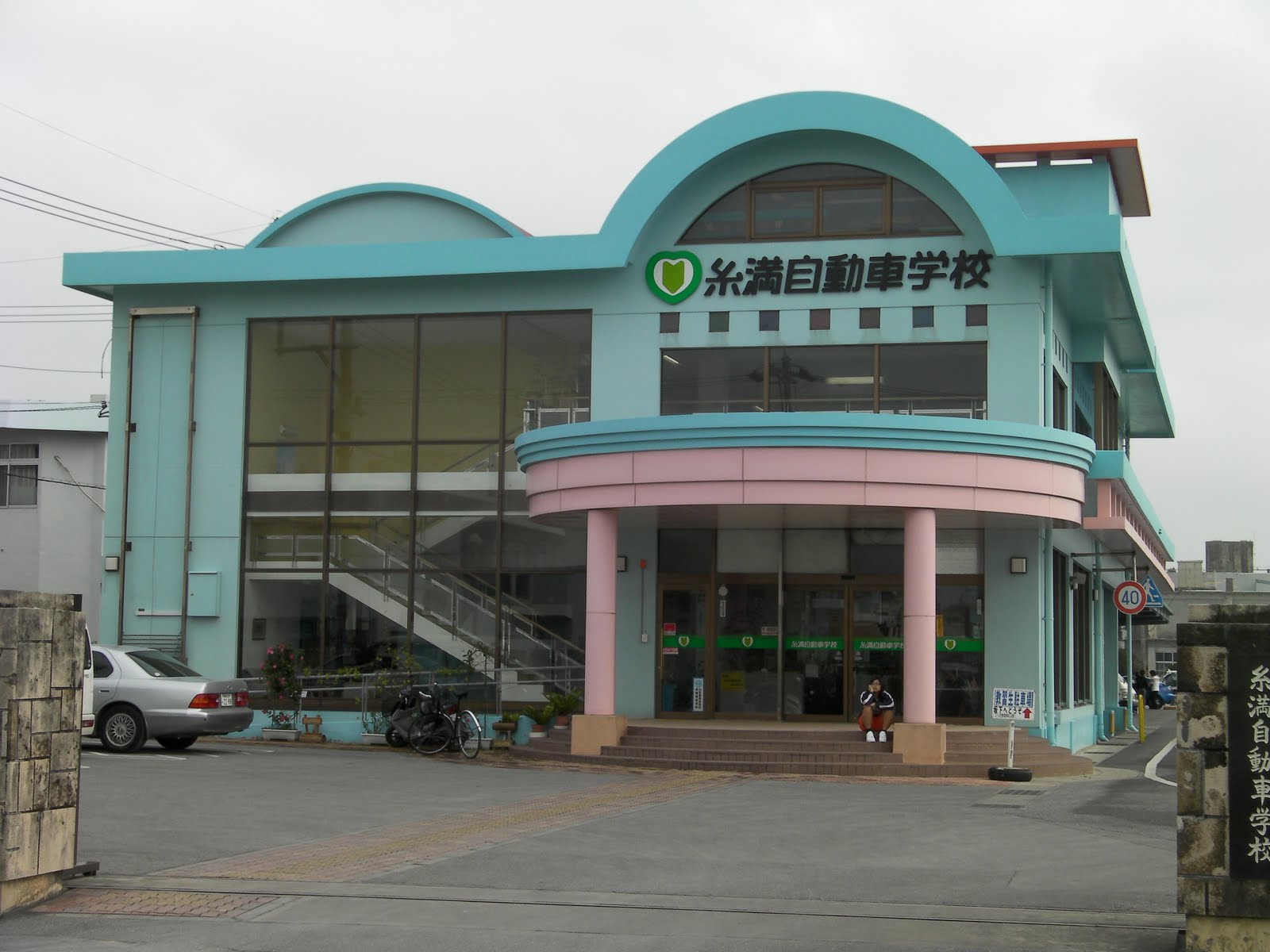
Buildings have COLOR. Pinks and greens and yellows and reds, Naha is less than inspiring in terms of size or even cleanliness, but some of the buildings in Okinawa just have the most audaciously bright colors I've ever seen.

A Bright Blue with Pink Driving School in Itoman Okinawa

Random house with bright blue and red accents

This sort of stuff seems arbitrary at first, but to me it's striking. Places are just more vibrant.You don't see color like this really anywhere, let alone in Japan. And these shots are all on Okinawa Island, the most touristy spot of them all.

It's quite touristy alright. And at times very grimy and dirty. But everyone knows you have to go elsewhere to see even a glimpse of what this place is like.

Naturally of course, Ryukyu cultural influence is a large part of what Okinawa was today. These islands weren't always Japanese, after all, in fact Japanese involvement with Okinawa is (I believe) only around 400 years. The people of the Ryukyu culture left behind many interesting sights such as castles and temples, which in all honesty, look nothing like anything else found in Japan.

Ryukyu King's hide-away near Castle in Naha

Shrine on Kumejima Island.

So the architecture stems out into quite a variety not really noticed on the main-land. Naturally the differences don't end there.

Nature in Japan has, to be honest, always been awe inspiring. Some of the parks that I've seen here take extreme detail in terms of showcasing the beauty of nature. Okinawa is no exception to this framework, yes, but there are characteristics that seem different.

For instance, a lot of the roads and areas just have lush plantlife sprouting up all over the place.


Sometimes it's almost TOO much.


Furthermore, Okinawa's Peace Memorial Park, dedicated to those who fell in the Battle of Okinawa (including foreigners), is absolutely stunning.

Incredible flowers.

Extremely Scenic

Very spacious and open

Just off the coast, atop a large hill near memorial graves
The area around the Park. There are wind farms around here.

The park, mind you, is located on a spot where tens of thousands of Okinawans committed suicide to avoid imprisonment and or slaughter, as directed by the Japanese government. The beauty of the place then, is rather humbling.

This sense of old world naturalism, stone, ivy, is further implimented as you go out to smaller islands. Consider Kumejima, which I went to and stayed overnight. I think the following image summarizes the island well.


Small clusters of towns surrounded by dense jungle like nature and beaches. Very picture esque. Also very different from Naha, with its big city layout, large arcades and shopping areas. Even Okinawa has separate cultures within itself.

As well, Okinawa has quite a bit of American influence due to the bases located on the main island.


This very American, 1970s diner like "West ward Sightseeing Drive In Restaurant" is located just outside of the park. Notice the crazy crumbled sign. The menue clarifies on it's American influence


It's hard to see, but steak sandwiches and eggs are included on the menu. (Steak sandwich was tasty by the way)

Other forms of American influence CERTAINLY include food.

(Oh god I will try not to talk about food too much, an entire blog about okinanwan food is here)

Many American fast food restaurants not found in Japan can be found in Okinawa.

That's an ad for A&W in Japan.

Food in general tends to skew from the Japanese norm. Sushi isn't very popular here, since sashimi quality fish isn't found off most sub tropical climates (so I've heard), instead a mixture of tropical foodstuffs and chinese/japanese cooking techniques. Unique ingredients like bitter melon, fruits, SPAM even. Pork is immensely popular in Okinawa; I think it was in each one of my meals in some manner or the other. Taco Rice, a combo of taco seasoned beef, lettuce, tomatoes, salsa, over rice, is also popular. Remember that this food is certainly influenced by American military occupation. Soldiers get HUNGRY!

Okinawan Soba is not really soba, more like ramen and udon combined. Pickled ginger, slow cooked pork belly and sparerib, seafood broth.

THAT PORK WAS TASTY!! With mango Juice fyi.

Okinawa is just... different. Even the islands are different from one another!

It's beautiful, and horrifylingly touristy. And was a lovely time. I'll miss it.


Especially AFRO NEST UGH YOU KINGS OF FOOD AND DRINK!

Toodles, more on my life... later. This post is long enough. I'm sure I didn't cover enough about Okinawa, but still, I think this captures a few glimpses.

Wednesday, March 3, 2010

Osaka in Reflection

Y'know, I came into Osaka expecting one or two things.

A. It would be a crazy, completely different world, a heaven on earth divided from the usual stereotypical Japan, where originality and creativity blossom and thrive.

OR

B. Another big 'ol city with dudes who really really hate foreigners.

And it turned out that it was... erm... neither really. And kind of both at the same time.

Certainly one aspect is true: Osaka is not foreigner friendly. Very rarely are signs in English, nor menus, or staff. (this isn't really a problem to me, but I can imagine for non Japanese speakers this is easily the biggest turnoff of them all). They try... but... y'know... it's not really Tokyo in terms of foreign tourism. Though it's the second largest city in Japan, when more statistically comparing it to Tokyo there is no question in terms of size, Tokyo has around 17 million people, Osaka only 2.1 (3 if you count commuters). This discrepancy is obvious from the get go, as naturally then, for many foreign tourists, Osaka seems to be tossed aside.

This is a shame though, because Osaka was actually very fascinating in its own regard. And I hate to continuously compare it to Tokyo (since I'm sure I will), but both are expansive cities on the coast of Japan that have created an epicenter of culture, food, business and trade, and even personal dialects. I remember reading about the "centers" theory of Japanese culture: how Japan comprised of two center cities that created everything media and socially, spreading it to the rest, and Osaka and Tokyo are those two cities.

To me, the similarity yet clear distinction is rather remarkable.

One of the first I noticed, and I'm sure I'm not the first to point this out, but people in Osaka, when standing in an escalator, stand on the OPPOSITE side of that of Tokyoites or Sapporians. (lulz sapporians thatisntawordmike shutup!). In other words, while letting the people in a rush pass, people in Osaka stand on a different side than people in Tokyo.

Well... that's just... weird really...

Stuff is just tweaked a little bit to be different. And lovely. And interesting.

Food also comes to mind as rather different, in a delightful way of course. Okonomiyaki has a different texture and method (for more info check out my friend's blog here). Street foods are idealized and heightened to gourmet status in restaurants. (Like imagine a hotdog being sold at a 4 star). And it's clearly 100% delicious.

The city is busy, but not... as... busy.

And, well, culture seems far more deep rooted. Osaka has 1300 year old temples after all. Amongst the concrete jungle inlaid are small temples, awkward in their composition as they are dwarfed by the surrounding buildings. but remarkably gem like. Tokyo, unfortunately due to WW2, doesn't have this feel. It's all just... new.

And yet... much like Tokyo, it seems so, impersonal. I just feel like everyone is coming to Osaka city for a "little bit". Then they leave. (Which is true, the population multiplies by 50% during the day). It distances it, makes it seem mirage like, the realism of such a place is distant.

But it's just... different. It's still Japan, still familiar in its own right, but it's just not quite the Japan that people stereotype. And I enjoy that.

I always like knowing that culture is more complex than we've made it out to be.

Nara next!

Thursday, February 25, 2010

Saturday, February 20, 2010

Doll Festival Shtuff

So I like cliche Japanese stuff, sue me.

Today my host mom took me to see some Hinamatsuri dolls that had been assembled nearby.

Apparently I under estimated the sheer number of dolls they would have. Something like thousands.


Yes it is that massive, this is just one room!


Crazy level of detail in these figures. But they're strangely similar

They're set up in a very specific order, and families used to pass them down to married couples. My host mom would have hers if there was still room in the house (oh goodness). People who no longer want theirs apparently give then away, and usually this means giving it to one of these places?

I'm not sure, she said this all in Japanese and I don't feel like wikipedia-ing it.

This place was kind of like a "doll" museum though, they even had some old ones from America!


Chip and Dale??

Anyways, that is all. Doll festival begins on March 3rd, but this place will be around showing off stuff till around April. Wowzerz dolls.

Wednesday, February 10, 2010

It's a "Whale" of a Time!

I have seen the mountain top.

And it is a glorious deep red flesh that permiates the soul. Whale meat.

Well not really... it's kind of "meh".

Actually, to be honest I wasn't even initially planning on making a blog about this food. I do too much food stuff as is I bet, and honestly, there wasn't much to report.

But what about the ethics of whaling? The taste? Is it worth it? Isn't it toxic?

So let's discuss.

 
Delightfully Deep Color eh? All for about 4 bucks.

I'm not really sure where to begin on this one. I think for starters I'll just summarize the taste; I'm sure some people are curious, and I am a connoisseur of this stuff after all. The best way I could explain it (and in retrospect it makes sense) is if someone took the flavor of beef, that deep, iron like, somewhat metalic, bold and rich flavor, and mixed it with the texture of a soft raw fish, like tuna. It's surprisingly lean tasting, again, tuna comes to mind on the mouth feel, but I couldn't help feeling like on the nose especially, this steak thing was wafting up. 

Though to be fair, the taste was somewhat masked by the small dollop of grated ginger on each piece. But that's what I felt it was like. Steak + tuna = whale.

It makes sense because mammals have blood, and aquatic animals have softer flesh. When you don't have to fight gravity, your muscles don't need to do as much work.

I'm pretty sure that's true. I read it somewhere.

Anyways!

Why is the idea of eating whale so perposterous to the majority of American consumers? It really IS just hard to say that whale consumption is "bad" or "wrong" for me (Yes, I am covering both right/wrong and good/bad here, I'm not an ethics phd people!). I'll list out the points I'm sure to come across in this stance. I'll try to cover them as best I can.
For those who don't want to read this extremely lengthy paper, skip to the bottom

--------------------------------------------------------------------------

1. Whales are cuuuuute, how can you eat those things?? / Animal death is cruel!
- I really don't feel like covering this one, but I suppose I have to.  If you don't like animals dying, that's fine. But I love cow and chicken and pig and fish; I don't plan on stopping myself from eating their deliciousness. We are always cruel to animals in their death, because our conception of killing is cruel. If that is what you think, by all means believe it, but to me, the death of an animal is normal. It happens all the time.

(Yes this is the naturalistic fallacy)

The point I'm trying to make is that this claim is not an ethical claim but a claim of personal preference disguised as one. It's like if I hate cargo shorts and so I tell everyone not to wear them, this doesn't make the cargo shorts wearing act wrong: it's just a preference. Untill there is some actual proof that cruelty against animals is wrong (good luck with that), this claim has no weight in the debate of whale consumption.

I'm so sure I'm going to get flack for this stance.

Anyways.

2. Whale is highly toxic. 
- I'd like to bring a study in to cover this one briefly. 

http://luna.pos.to/whale/jwa_v22_freeman.html

I'll just quote:

         "...two distinguished University of California cancer experts, Dr. Bruce Ames and Dr. Lois Gold, observe that a cup of coffee contains over one thousand chemicals, of which more than half of those tested cause cancer in laboratory animals."

In short, while mercury contamination in whales is certainly a possibility, the amount of whale consumed as well as the frequency of consumption also comes into play. Conversely, people drink coffee substantially in America, but the lack of bans on coffee suggests a sort of hypocrisy if we argue that whale consumption is bad. Why ban one before the other when the other is possibly more dangerous? What about tobacco? Alcohol? There are plenty other far more consumed products that do harm to us in very empirically tested ways; a bit of whale is certainly not comparible.

In fact that study up there suggests that the toxic nature of whales itself is debatable.

NEXT.

3. Whales are an important part of the aquatic environment, killing whales hurts the cycle.
- I really hate to pull out the "we do worse stuff" claim again, but this is an environmental claim. We dump insane amounts of toxic waste into the ocean, deforest huge masses of land each day, and you mean to tell me that killing whales has a higher priority in being banned?

Furthermore, in some instances, whale killing is done on ACCIDENT by shipping crews.  The WWF even admits this!
            "In fact, ship strikes are to blame for 90 percent of Northern right whale deaths for which the cause is known" 
http://www.panda.org/what_we_do/endangered_species/cetaceans/threats/shipping/ 

So I just can't take this claim seriously either. Why is a full ban necessary? What about restrictions that allow sustainability instead? I have no problem with the idea of conserving the environment, but this does not require a full on ban. This claim is merely suggesting over farming should be stopped, which I can agree with. Saying that over farming is bad does not mean consumption is also bad.

--------------------------------------------------------------------------

This is turning into a paper of a blog, so I'll just say this.

I don't see what the big fuss is all about. Just some environmental/animal rights shenanigans. 

And yet, if you must know, despite my clear adamant defense of whale consumption, I doubt I'm gonna eat it any time soon.

I mean it tastes ALRIGHT. Too expensive in my opinion. I could buy a huge salmon steak for that price. (or 8 nigiri pieces at toppi kaiten zushi, delish!)

Sunday, February 7, 2010

New Vlog: Snow Festival

You guys know the drill! Do it upppp.


If the embed is messed up, click the link below!

http://www.youtube.com/watch?v=3Rs3mvLCXg4

Tuesday, January 12, 2010

Vlog: Jacksonville Burger

I am a fool who does "Coming of Age Day" in the most American tradition I know: eating burgers.

Check the vid!

For some reason the video doesn't fit into the screen... hmmmm.

Click the link for a direct youtube vid:

http://www.youtube.com/watch?v=T5sOrV1Wy-k


Sunday, January 10, 2010

Japanese Cheetos

Who doesn't know what Cheetos are?

The puffed crispy strips of delightful nuclear orange cheesy powdery goodness, every kid in America has had a cheeto before. And everyone knows exactly how they taste. Salty crunchy, and artificially cheesy.

But alas, perhaps in an attempt to market to different tastes, cheetos, do exist here, but they taste different.

That's right, they taste different.

And no, I don't mean they sell "roasted corn" flavor here and Cheese flavor there (which they do). I mean that A cheese flavored cheeto from Japan tastes COMPLETELY different from a Cheeto from America.


I mean dang they aren't even the same color!

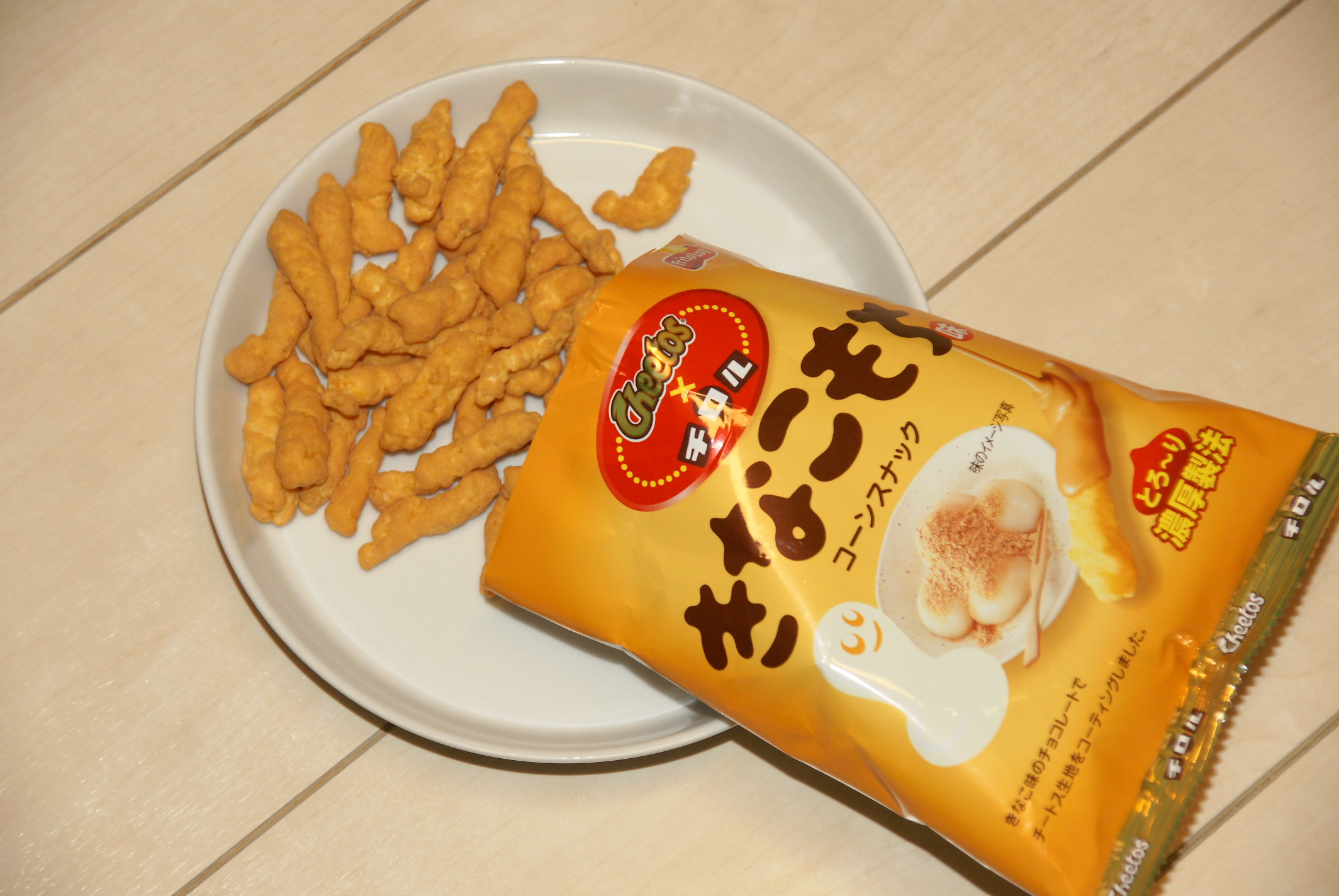
But Alas, as I mentioned before, they have other flavors besides cheese. Perhaps one of the most shocking is "Coffee Nougat flavor". Tirol, a chocolate company, teamed up with Cheetos to make this "collaborative effort"

Aka, a chocolate covered cheeto.

I am an adventurer, and so when I noticed the package labeled "Tirol x Cheetos", I simply HAD to purchase it.

Ohhhhh delightful.

Upon opening the package I was surprised to find that the cheeto itself was rather... boring looking. It almost looked like it just had Dusty Chocolate powder on it.

I mean really Fritos, what a lame looking snack!

But how'd it turn out?? That's the important question!


Kinda tasty actually. Think chocolate pretzel, but more crunchy, less salty, and a bit of coffee on the coating. Also Chocolate. And a cheeto. Wow.

Super surreal though. What a ridiculous snack.


...


What the... soy flour mochi flavored chocolate covered?? TIROL YOU MONSTERS!!!

(I wish there was a better translation for that...)

Wednesday, December 23, 2009

Nature and Hokkaido

Now I know I've been slacking on the photos of Japan's scenery. Which is a darn shame.

I live in Hokkaido, and we have some immense beauty.

To me at least, this is most prevalently displayed in the vivid distinctions nature creates.

About a month ago, as fall hastily closed, the last few leaves falling, is about when I noticed this trend.

Rather than bogging down the blog with my analysis of beauty in nature, I'm just gonna show some photos, and stay clear of overly talking.

At the end of fall... the mountains in the back started to frost over. I thought the white was pretty striking in comparison to the bright yellow. This is the sight that kind of made me realize, and in turn begin to appreciate, what it is I am surrounded by on a daily basis.


A better view, check out the mountains in the back.

Keiteki, my dorm, also has it's own vivid colors.

As an example, a lot of the leaves that fall from the surrounding trees turn WHITE when they dry out. Crazy color.

Not photoshopped :p


But the vine on the side of building turns BRIGHT RED.


Naturally, as it's winter now we have the amazing contrast of black to white.

After a VERY rough 15 inch blizzard, my walk to class looked like this.


And just outside of the student center?


I could get used to this sort of life... Winter wonderland.

Happy holidays everyone.

Saturday, December 12, 2009

Okinawan Food

Okay look look look, yes. I know.

I know.

I knowwwwwww.

Too much food stuff right?

Pardon me while I break down the necessary link between food and culture.

Argument goes as follows (thanks Mr Basl for this argument flow chart format!)

1. People cook based on their tastes, their likes and dislikes.
2. People can be classified into cultures.
3. Cultures determine the way people behave.
THEREFORE
4. Culture can determine a given diet.

Duh kids. Duh.

SO

In a culture related way, I'd like to talk about my Friday.

I am blessed enough to be taking a class from a VERY cool medicine teacher (don't ask how this situation came to be, what a story that is!). He's so cool that last week he decided to cancel class and INSTEAD, take the students to an Okinawan restaurant. In Hokkaido.

For those who don't know, Okinawa is one of the prefectures of Japan, consisting of hundreds if not thousands of tiny islands south of the main four. I'm not here to give a history lesson, but basically, this cluster of islands is fairly detached from the centralized country that focuses on Tokyo/Osaka culture. 標準語, or standard Japanese, is really just Toyko Japanese, which due to centralization within the culture, gradually became "normal'.

But to avoid a tangent here, because this area is somewhat detached from the "center", the culture, and in turn the food, can be quite distinct.

Yes, they do have their own dialect. I won't go into that either.

This is a point that needs to be addressed; Japan is not just a single likeminded country. People act, speak, look, and think VERY differently from place to place. If you took an Okinawan and an Osakan and made them speak in their respective dialects, the two wouldn't understand each other. It'd be like Spanish and Italian.

The problem is that we, as people on the outside, just SEE the culture as being Tokyo-ian or Osakan, because of this center ideology within the country. This is "Japanese", Tokyo is the hub, everything shoots out from there. But if you are to understand a country's culture, focusing on a city will give you a very narrow outlook on it.

I mean c'mon, do people from New Orleans act like people from New York? I'm not saying anything new here!

So with that in mind, let's focus on Okinawa, a prefecture SO far from the rest of the country, in many ways it's like it's own country. But it's Japan! It's JAPAN!

For 2500 yen, you get a multiple course meal and all you can drink. I dig it. Thanks teach for the hook up!

And the food is CRAZY different. Maybe this is partially the genius of the owner/chef, or maybe it's just the way Okinawans do cuisine, but let's see. Here's some of the highlights:


Squid Ink Yakisoba, with special Okinawa style soba.

Squid ink, for my Japanese word nerds, is quite literally in Japanese ALSO "Squid Ink" or イカ墨.

Anyways.

Then they brought out a special Okiawan style Shochu, which is a clear distilled alcoholic drink similar, but much stronger than, Sake, usually served over ice. It has a similar smell to some whiskey, but contains far less alcohol. Here's what they served it as:


This one was especially smooth. But the nose was a little off putting... kind of musky. Still fairly enjoyable. It paired extremely well with one dish in particular, which was a small block of Tofu covered in a red miso sauce.


Perhaps the reason this tofu worked so well with the sake was because it had been soaked in the alcohol itself. But the texture of it was really marvelous, It has this kind of butter, smooth, rich mouth-feel, the kind you associate with foie gras or something. Explains why it came in at less than 1 cubic inch to be shared by 3 people. Riiiiich. And pretty dang impressive. I've obviously never had tofu like that.

But surely, to everyone, the highlight of the night was the following dish, which actually came pretty early:


The title of this dish in romaji is "Gooya Champloo". Nerds recognize the name Champloo imediately from the popular anime Samurai Champloo. Champloo in Japanese is ACTUALLY チャンプルー, pronounced "Chanpuruu", and it refers to a stir fry dish, a "mash up" of sorts. The name of the anime actually is derived from this "stir fry/mashup" idea, as the story combines multiple genres and ideas, even stories themselves.

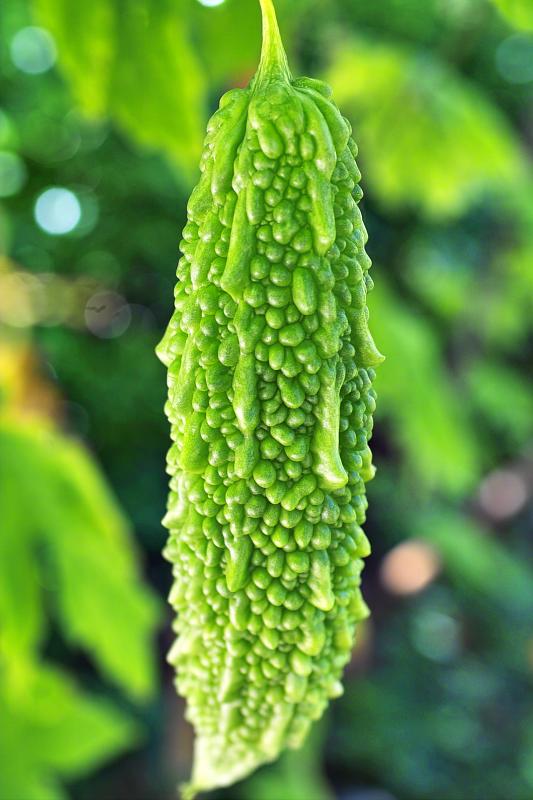
AND, Gooya, oh gooya, means "Bitter melon". Those green things you see? Bitter melon.

I googled bitter melon to show yall, they look like this:

Mmmmm, bitterrrrr

VERY different taste on this one folks. It's hard to describe bitter melon, something like a root vegetable but with less aroma, a slight bitter kick, better texture. But it's as Okinawan as it gets. Stir fried with some tofu and a little ham (which was shocking for sure, you don't see ham much in Japan), And it was TASTYYYYY.

And that's Okinawan food.

So what have we learned here?

Well what HAVEN'T we learned here? Food is indeed a mirror to a culture, and despite the idea that a country can have it's own style, regions make variations on the diet extremely distinct.

I mean, what IS Japanese food?