Showing posts with label Travel. Show all posts

Thursday, April 1, 2010

Okinawa in Reflection (Yes this post is also too long)

Why yes, I do realize that this is 2 weeks late.

Yes, I did get back home on the 19th, so I HAVE been putting it off.

Why though? Because I'm lazy? Well naturally yes, but perhaps more importantly, Okinawa is hard to define and blog about.

To write an entry about this place wouldn't do it justice. And I don't say that because Okinawa is some amazing magical Japanese wonderland where Unicorns poop rainbows, but more because the place is... different.

On mass scale.

For one. Okinawa is a VARIETY of islands. To say I've gone "there" is in itself fairly audacious, because the sheer number of islands are all different. You have islands like "Okinawa Island", which includes Naha, the capital of the prefecture, as well as a fairly large city of around 700,000 people, but then conversely, the "Yaeyama Islands", which are something like 90-95% uninhabited forests with no real cities at all.

I know this is a running theme in my blogs, but a country's "culture" as an idea is one that is hard to define. Okinawa has been blessed with a history that is somewhat separate from Japan, which gives it a variety of characteristics that are otherwise rare in Japanese culture.

But it's still Japan!

How are we getting away with saying "this is how all Japanese people act"?

As an example of differences, first thing I noticed right off the bat.


Buildings have COLOR. Pinks and greens and yellows and reds, Naha is less than inspiring in terms of size or even cleanliness, but some of the buildings in Okinawa just have the most audaciously bright colors I've ever seen.
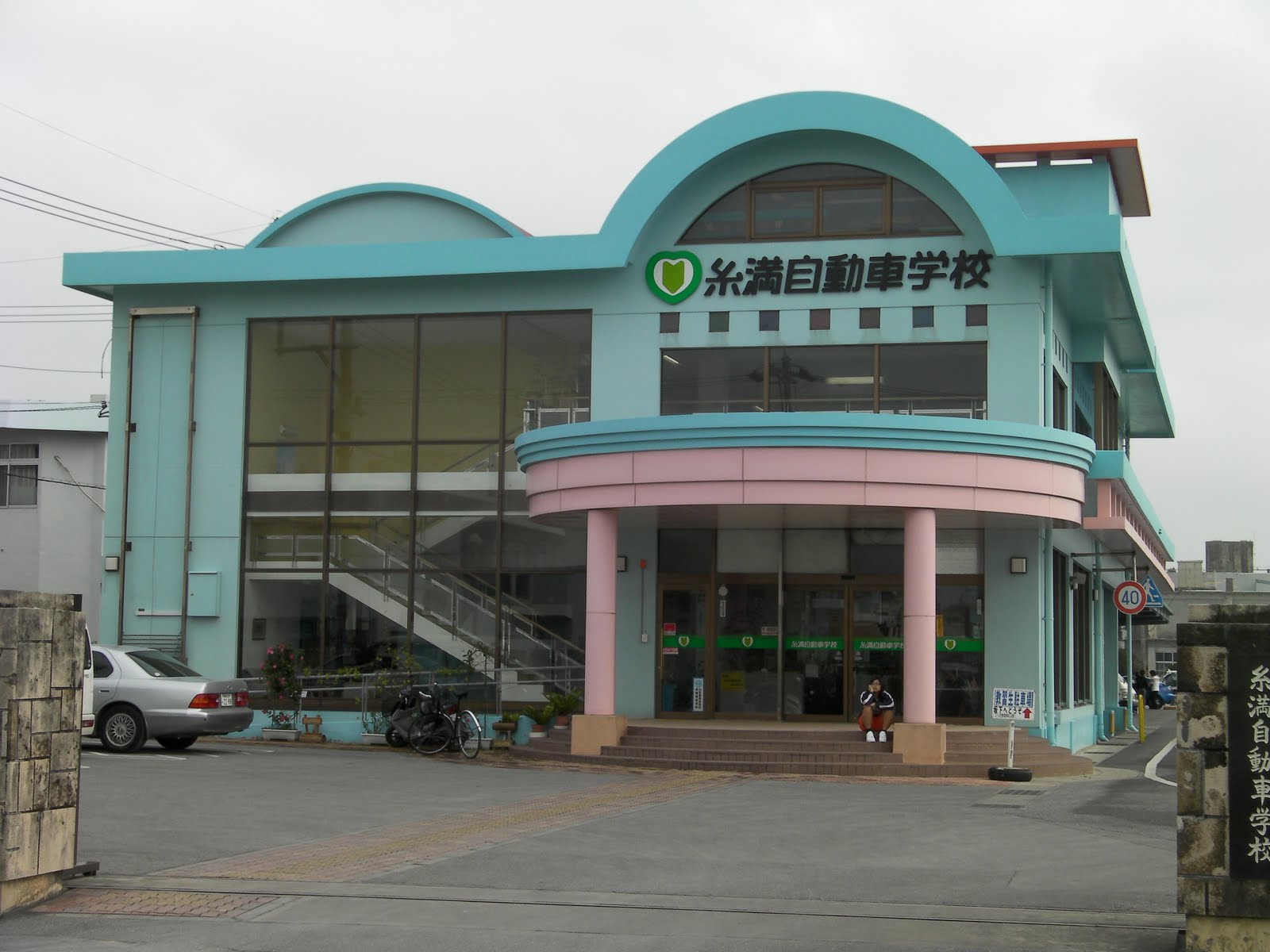
A Bright Blue with Pink Driving School in Itoman Okinawa

Random house with bright blue and red accents

This sort of stuff seems arbitrary at first, but to me it's striking. Places are just more vibrant.You don't see color like this really anywhere, let alone in Japan. And these shots are all on Okinawa Island, the most touristy spot of them all.

It's quite touristy alright. And at times very grimy and dirty. But everyone knows you have to go elsewhere to see even a glimpse of what this place is like.

Naturally of course, Ryukyu cultural influence is a large part of what Okinawa was today. These islands weren't always Japanese, after all, in fact Japanese involvement with Okinawa is (I believe) only around 400 years. The people of the Ryukyu culture left behind many interesting sights such as castles and temples, which in all honesty, look nothing like anything else found in Japan.

Ryukyu King's hide-away near Castle in Naha

Shrine on Kumejima Island.

So the architecture stems out into quite a variety not really noticed on the main-land. Naturally the differences don't end there.

Nature in Japan has, to be honest, always been awe inspiring. Some of the parks that I've seen here take extreme detail in terms of showcasing the beauty of nature. Okinawa is no exception to this framework, yes, but there are characteristics that seem different.

For instance, a lot of the roads and areas just have lush plantlife sprouting up all over the place.


Sometimes it's almost TOO much.


Furthermore, Okinawa's Peace Memorial Park, dedicated to those who fell in the Battle of Okinawa (including foreigners), is absolutely stunning.

Incredible flowers.

Extremely Scenic

Very spacious and open

Just off the coast, atop a large hill near memorial graves
The area around the Park. There are wind farms around here.

The park, mind you, is located on a spot where tens of thousands of Okinawans committed suicide to avoid imprisonment and or slaughter, as directed by the Japanese government. The beauty of the place then, is rather humbling.

This sense of old world naturalism, stone, ivy, is further implimented as you go out to smaller islands. Consider Kumejima, which I went to and stayed overnight. I think the following image summarizes the island well.


Small clusters of towns surrounded by dense jungle like nature and beaches. Very picture esque. Also very different from Naha, with its big city layout, large arcades and shopping areas. Even Okinawa has separate cultures within itself.

As well, Okinawa has quite a bit of American influence due to the bases located on the main island.


This very American, 1970s diner like "West ward Sightseeing Drive In Restaurant" is located just outside of the park. Notice the crazy crumbled sign. The menue clarifies on it's American influence


It's hard to see, but steak sandwiches and eggs are included on the menu. (Steak sandwich was tasty by the way)

Other forms of American influence CERTAINLY include food.

(Oh god I will try not to talk about food too much, an entire blog about okinanwan food is here)

Many American fast food restaurants not found in Japan can be found in Okinawa.

That's an ad for A&W in Japan.

Food in general tends to skew from the Japanese norm. Sushi isn't very popular here, since sashimi quality fish isn't found off most sub tropical climates (so I've heard), instead a mixture of tropical foodstuffs and chinese/japanese cooking techniques. Unique ingredients like bitter melon, fruits, SPAM even. Pork is immensely popular in Okinawa; I think it was in each one of my meals in some manner or the other. Taco Rice, a combo of taco seasoned beef, lettuce, tomatoes, salsa, over rice, is also popular. Remember that this food is certainly influenced by American military occupation. Soldiers get HUNGRY!

Okinawan Soba is not really soba, more like ramen and udon combined. Pickled ginger, slow cooked pork belly and sparerib, seafood broth.

THAT PORK WAS TASTY!! With mango Juice fyi.

Okinawa is just... different. Even the islands are different from one another!

It's beautiful, and horrifylingly touristy. And was a lovely time. I'll miss it.


Especially AFRO NEST UGH YOU KINGS OF FOOD AND DRINK!

Toodles, more on my life... later. This post is long enough. I'm sure I didn't cover enough about Okinawa, but still, I think this captures a few glimpses.

Tuesday, March 23, 2010

Something interesting you might notice in Osaka... (Video)


If the embed isn't working, click the link below.

http://www.youtube.com/watch?v=waKjUC-wCfc

It's just like Lewis Black was talking about with starbucks, except it's REAL.


Monday, March 8, 2010

When I say Kobe, you say...?

Yakuza? Possibly, I guess that's true...

Coast? Well yeah but...

Kansai region? Oh c'mon now you're just being blatant.

BEEF?

COW?!?!?!

YES! Thank you.

I'll stop being schizophrenic here.

In the three days I was in Kobe, I had Kobe beef not once, not twice, by THREE times.

Yes, every day. I am a glutton, I realize this. Thanks to the Japanese government for the scholarship! Your money is being spent well!

Before beginning my analysis as well as description, I should recommend people not do this. Please, don't eat that much Kobe beef. It's expensive. It's bad for you. And it's madly delicious.

I'm sure we all know the idea of Kobe beef: Japanese farmers managed to breed a species of cattle with high levels of intramuscular fat. Steak, normally, is rated as you all know, and part of this rating is based on this "marbling" of fat, and the highest ranking has the deepest, best little threads and veins of fat seeping through it. These fat pathways melt under high temperature, and that's what makes steak juicy and tender and rich.

Japanese farmers essentially created a new breed of cattle which is known as "wagyu" (literally Japanese Cow, or 和牛) to build on this idea of richness and fattiness in steak being delightful. This is the largest misconception about Kobe beef, as Kobe beef is a specific TYPE of Wagyu, not an actual breed of cattle itself.

In fact the name "Kobe" beef really only comes from farming techniques associated with the Wagyu cattle raised in Kobe, Japan. Most of you know the farming techniques includes daily massages with sake and feeding the cows beer to increase the appetite and relax them.

Clearly this technique has an effect on fat content, as according to some people the ratio reaches 20%meat/80%fat (to give you an example of comparison, a McDonalds hamburger is something like 70/30) Yes, four times more fat than meat in a steak. And a reverse in comparison to most beef.

This is insane nuts. This is crazy.

Does that even sound appetizing? It should!

How many of you have had foie gras? It's like that, but... steak.

Anyways.

The ability then, to produce large quantities of this steak is of course, extremely limited. Combined with large demand for delicious top quality cow, and you have prices for something like 50 dollars a 150 gram steak (that's about a 5 ouncer), or 300 dollars to the pound.

To be truthful, there is all sorts of Wagyu beef in Japan, and in many ways it seems redundant to go all the way out to Kobe to just try steak. Let alone more than once. Especially considering the whole issue with "hyper branding" in Japan. (which I covered in a previous blog here). In fact, it's very possible that Wagyu vs Kobe have almost little to no serious distinction.

But all I know is that Kobe beef is mighty delicious. And it requires proper technique to produce good results.

Let's examine the ways I enjoyed such steak. (photobomb alert)

Day one, I went to a recommended restaurant called "SteakLand Kobe"

For added effect they have TWO signs, and one is just a legit steak.

This restaurant cooks their steak teppanyaki, 鉄板焼き (quite literally iron plank grill, I love japanese!) style, meaning... er... on a big ol flattop in front of you. For 70 bucks, you get all the fixins. First they serve you filler

Seared scallops, shrimp (head and body, DELICIOUS) and a few root veggies

This also comes with salad, soup, rice, Japanese pickles (tsukemono), and smoked salmon of all things


Then the big boy. The steak.

This is not all mine, there was a guy sitting next to me

You'll notice that the steak is... really really pink. More on that later.

They had trimmed off a piece of the fat cap surrounding this steak, which they then fried up and melted down.

Mmmmm... beef fat.

This is then used to cook some beansprouts and cabbage that comes with your meal.

God... that is evil

You can see the juice just running off the beef, pooling onto the plate. All delicious cow. Also notice the glossy threads of fat through the muscle tissue. This is some rich stuff.

I kind of liked how they cut the steak for me... though honestly the pieces were still not bite sized.

You can't see it, but it was served with garlic chips and a dipping sauce.

To me, this idea of pairing up too much with the food itself, which is so rich and flavorful, is unfortunate. Simple is best when you have essentially one of the finest ingredients in the world at your disposal, let it shine.

In my opinion.

But still, you have the option to eat it as you like, and it was cooked perfectly medium rare, the fat melted and smooth. When you chew this stuff, it turns to liquid, because so little of the beef is actually protein at all. Again... very foie gras like.

SO UMMMM THAT STEAK WAS GOOD.

Came with a yuzu sorbet and coffee at the end. The acidity is a good roundout for the richness of the meat.


Overall, very satisfying.

Day two, I cannot say the same.

I hadn't originally planned on eating steak that day (or ever for that matter), but Kobe has a cute little Chinatown area that I decided to have dinner in. They have all sorts of stalls selling Gyoza, ramen, chinese dishes, etc. One of the stalls was serving kobe beef samplings for just 500 yen. I couldn't pass up the deal.

Folks, I am usually for cheap eats, but in this case, I think you frequently get what you pay for. This was not cooked well, slathered with a overbearing sauce, low end stuff. It didn't even come close to day one.

DAY THREE though, man... back on track!

After realizing I had eaten Kobe beef twice in a row, I decided to round out the trip with a 3rd attempt. Three times a charm after all. Except this time, I went to a very acclaimed restaurant named A-1 steak. Openning in Kobe quite some time ago, the restaurant is now a chain within the Kobe area serving up the goods.


This place cooks your steak, to order of course, in a different fashion, something like a combination of grilling and flambe-ing.


For 60 bucks you get soup, wine, rice, those Japanese pickles, miso soup, and STEAK.

Setting the steak aflame!


The platter he sets ablaze with brandy is really steak covered in delicious, caramelized vegetables, served on cast iron heated plates that actually continue to cook it, rendering more of that OH SO necessary fat.

Glistening, omygoodness

Also clearly lovely. Both very delicious, day one and day 3.

But one thing I MUST point out with Kobe beef.

It's not... beefy.

Like when we think of steak, we think of that deep iron tasting rich meat, high notes beefy smell, deep broody, musky flavor. Kobe beef has the richness, but the actual deep dark flavor is missing, in fact, kobe beef's over all flavor profile is extremely sublime and subtle. It's delicious, but it's hard to compare it to normal cattle.

Combining this fact with the actual color of the meat, which as I mentioned is very light pink, and originally, farmers found that people WEREN'T buying the stuff in America, because the concept of what is "beef" is so different in the states from this Wagyu profile. So Wagyu now are actually bred with Angus cattle to produce somewhat of a hybrid in America, darker flesh and more meaty flavor, but a cut from the amount of fat marbling.

Anyways, this entry is massive so...

Um....

Kobe beef is delicious. Wagyu beef is delicious. Beef is delicious. If you love food, you should try it. You can even find some places that make it amazingly, without spending hundreds of dollars a person.

Now, I have adventures to seek out.

Up up and awayyy!

Thursday, March 4, 2010

Nara In Reflection

Nara is something I think everyone needs to see when they come to Japan.

And I don't say this purely on the basis of Nara's fame: it's huge sprawling historical landmarks. Though I think anyone studying Japanese deserves to see the history of this fascinating culture, most of which seems buried beneath the modern thriving technological mass world. Tokyo towers over the feeble, old, shrines and temples of the historical world.

To be fair, Kyoto is surely visited just as much if not more than Tokyo by tourists, and it has more temples than one can count, but many of these temples are still inlaid in city, concrete piling up over them. It makes the experience impersonal, distant, and to me at least, some of the cohesiveness is greatly reduced. When you're in a beautiful temple and you see a office building pop up over the gate, it makes things odd.

No, I say people need to see Nara because the town just feels... personal.

I think with any trend of a city growing, the people become distant, seperate, individual. Tokyo is a great example of this because of so many people coming from other places to work. Groups disolve into individuals living life.

Nara is as much a place of tourism for Japanese culture as it is a real town, with real communities of individuals living life. And this sense of people actually living life is easily accessible, because the so called touristy areas are just... in housing and life. Across the street from Houryuuji temple, ie. the oldest temple in Japan, built in the 600s, are people's houses! Can you imagine living next to something that's 1300-1400 years old? And actually living there? Like... living!

I suppose my fascination with Japan lies mostly in how I am always distant from the real lives of individuals due to my foreigner status. But when I take a walk down the streets of Nara, I feel that sense of realism, like I have fallen into a very real world filled with interacting groups of people. It's not just a city with people coming in to work, and then leaving. It's not just a place were people go to see stuff. These roles exist too, yes, but in truth Nara is a town where people just do what we're supposed to, they live.

This combination of living among something extremely important is fascinating to me, and personal, and moving.

And even a point of tourism, this place has really cool stuff! Nara is legitimately beautiful. Parks, trees, nature is everywhere, the temples are magnificent, and the architecture of even peoples houses is reminiscent of something old and sacred.

I can't help but be amazing by the intense beauty of this town.

And the food! The food was amazing! Little mom and pop shops that have been open for 40 years. The town just feels PERSONAL.

Two examples of amazing food come to mind. All in one day mind you.

Roost Cafe, about 20 minutes from Houryuuji.
Roost is an amazing cafe that takes old world Japanese cuisine and applies new world twists to it. The interior is ironically decorated with African items (I still don't get this part), but the food is very Japanese. For 10 dollars you get this:


Beautiful
Extremely well presented, 6 little tiny dishes of Okazu (お菜), or side dishes on the left, tofu, potatoes, wakame, stewed onions, among others, and to the right, a salad of tomatoes, garlic, and lettuce, with lightly breaded and fried salmon, with roasted tomato mayonnaise. And rice. And miso soup. And amazing coffee.

For 10 dollars. Just... insane.

Along with that.


THE BEST produce I HAVE EVER TASTED IN MY LIFE. I had the pleasure of walking by a local farm and purchased some strawberries. They were all about the size of your thumb, and they MELT in your mouth, fragrant and ungodly sweet, hints of rose and mint behind the EXPLOSION of strawberry. Just insane! INSANE! And across the street, a temple from the 700s. Like... wtf?

Tokyo, Sapporo, Osaka, how come Nara just owned you on the trip in terms of food?

It's just an incredible place.

I'm sure I am not fully getting my emotions across through this blog, so I'll just say this. Nara was amazing. It has been hands down one of the most memorable experiences of my life.

Wednesday, March 3, 2010

Osaka in Reflection

Y'know, I came into Osaka expecting one or two things.

A. It would be a crazy, completely different world, a heaven on earth divided from the usual stereotypical Japan, where originality and creativity blossom and thrive.

OR

B. Another big 'ol city with dudes who really really hate foreigners.

And it turned out that it was... erm... neither really. And kind of both at the same time.

Certainly one aspect is true: Osaka is not foreigner friendly. Very rarely are signs in English, nor menus, or staff. (this isn't really a problem to me, but I can imagine for non Japanese speakers this is easily the biggest turnoff of them all). They try... but... y'know... it's not really Tokyo in terms of foreign tourism. Though it's the second largest city in Japan, when more statistically comparing it to Tokyo there is no question in terms of size, Tokyo has around 17 million people, Osaka only 2.1 (3 if you count commuters). This discrepancy is obvious from the get go, as naturally then, for many foreign tourists, Osaka seems to be tossed aside.

This is a shame though, because Osaka was actually very fascinating in its own regard. And I hate to continuously compare it to Tokyo (since I'm sure I will), but both are expansive cities on the coast of Japan that have created an epicenter of culture, food, business and trade, and even personal dialects. I remember reading about the "centers" theory of Japanese culture: how Japan comprised of two center cities that created everything media and socially, spreading it to the rest, and Osaka and Tokyo are those two cities.

To me, the similarity yet clear distinction is rather remarkable.

One of the first I noticed, and I'm sure I'm not the first to point this out, but people in Osaka, when standing in an escalator, stand on the OPPOSITE side of that of Tokyoites or Sapporians. (lulz sapporians thatisntawordmike shutup!). In other words, while letting the people in a rush pass, people in Osaka stand on a different side than people in Tokyo.

Well... that's just... weird really...

Stuff is just tweaked a little bit to be different. And lovely. And interesting.

Food also comes to mind as rather different, in a delightful way of course. Okonomiyaki has a different texture and method (for more info check out my friend's blog here). Street foods are idealized and heightened to gourmet status in restaurants. (Like imagine a hotdog being sold at a 4 star). And it's clearly 100% delicious.

The city is busy, but not... as... busy.

And, well, culture seems far more deep rooted. Osaka has 1300 year old temples after all. Amongst the concrete jungle inlaid are small temples, awkward in their composition as they are dwarfed by the surrounding buildings. but remarkably gem like. Tokyo, unfortunately due to WW2, doesn't have this feel. It's all just... new.

And yet... much like Tokyo, it seems so, impersonal. I just feel like everyone is coming to Osaka city for a "little bit". Then they leave. (Which is true, the population multiplies by 50% during the day). It distances it, makes it seem mirage like, the realism of such a place is distant.

But it's just... different. It's still Japan, still familiar in its own right, but it's just not quite the Japan that people stereotype. And I enjoy that.

I always like knowing that culture is more complex than we've made it out to be.

Nara next!

Saturday, February 20, 2010

Doll Festival Shtuff

So I like cliche Japanese stuff, sue me.

Today my host mom took me to see some Hinamatsuri dolls that had been assembled nearby.

Apparently I under estimated the sheer number of dolls they would have. Something like thousands.


Yes it is that massive, this is just one room!


Crazy level of detail in these figures. But they're strangely similar

They're set up in a very specific order, and families used to pass them down to married couples. My host mom would have hers if there was still room in the house (oh goodness). People who no longer want theirs apparently give then away, and usually this means giving it to one of these places?

I'm not sure, she said this all in Japanese and I don't feel like wikipedia-ing it.

This place was kind of like a "doll" museum though, they even had some old ones from America!


Chip and Dale??

Anyways, that is all. Doll festival begins on March 3rd, but this place will be around showing off stuff till around April. Wowzerz dolls.

Saturday, February 6, 2010

End of Semester

Man... those finals were rough.

So the first semester of Hokkaido adventure time has ended. And thus begins my amazingly obscene long spring break. Just under 2 months really...

What is Mike planning to do in such a long time?

TRAVEL YOU FOOLS. TRAVEL.

I have been blessed with a scholarship this year, which, when combined with my hilariously minuscule dormitory costs (about 100 USD per month, utilities included), has allowed me a rather ample amount of funding for adventure. Aside from the HD camera I bought, I haven't really spent any money on anything besides food and train tickets. No clothes, no weird trinkets, nothing.

So... with money in hand, I figure now, with all the immense freetime I have on spring break, I can regain my tourist role in society, and see more of this gloriously unique country.

Here I will be announcing my VERY TENTATIVE schedule for the spring break vacation.

Feb 18th-22nd, Nagano. My host family is amazing!!!!
Feb 23rd - 28th, Other Honshu adventures. Osaka, maybe Koyasan, Nara, etc.
March 1st-8th: Okinawa. Beaching it UP
March 9th - 14th: Back to Honshu for more adventure, A brief stay in Nagoya is in the works?
March 15-17: Tokyo. Gotta love Tokyo
March 18th: Fly back to Sapporo


Yes, I am going to Okinawa. I am PUMPED.

Along the way I plan on doing TONS of media content. I've been avoiding video editing because it just takes so long! HD is a lot of data to transfer to a video editing program, and each video, shockingly, takes a good 3-4 hours to fully complete. So obviously... I'm making these videos as a labor of love.

Cause I love you guys!

And of course, I'm really looking to well document what I've done here.

Speaking of video blogs... get ready for a new one soon!

Can I get some feedback on those please? FORREAL! Ideas?

Man I am not used to this freetime...

Up up and awayyyyy.